How to Build a Go-to-Market Engine That Makes Investors Pay Attention — with Javier Lozano Jr.
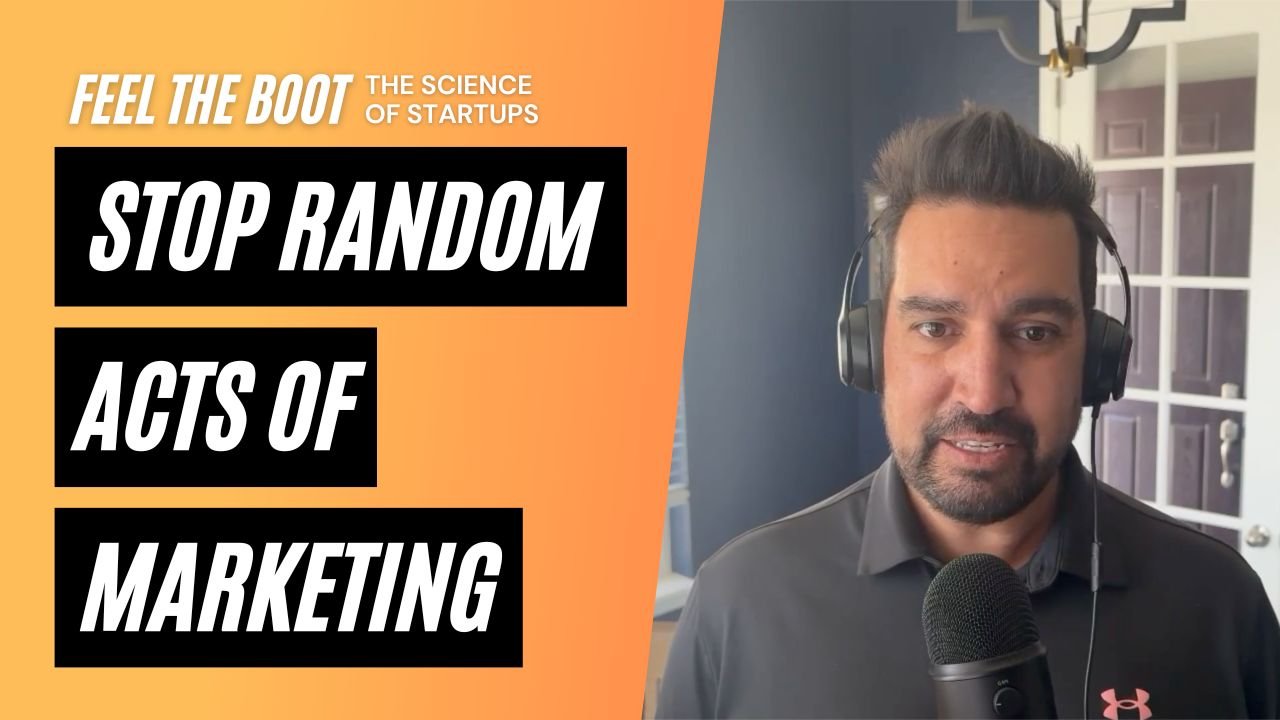
Most early-stage founders I work with are busy with marketing. They're posting on LinkedIn. Running some ads. Maybe sending a few emails. They're putting in the hours. But when I ask them what's filling their pipeline, I get a long pause.
That's the gap. Activity isn't traction, and investors can tell the difference in seconds.
I recently sat down with Javier Lozano Jr., a fractional CMO who has helped scale companies from roughly $1M to over $20M in revenue. He was previously the head of marketing at Wrapmate, where he built the go-to-market engine during a growth run that included a $16M raise. We talked about what founders get wrong about marketing, how to build credibility when you're a nobody, and the specific moves that set up Wrapmate's fundraise months before it happened.
What struck me most about the conversation is how clearly Javier's approach maps to what I teach on the fundraising side. The same principles that make marketing work (focus, validation, telling the right story to the right audience) are exactly what make a company fundable. Here's what stood out.
The lead quality problem nobody wants to talk about
One of the first things Javier discovered when he walked into Wrapmate was a classic early-stage trap. The company was generating hundreds, sometimes thousands of leads. The agency they were using was getting them at two and three dollars each. Everyone was excited.
Then he looked under the hood.
Out of every 100 leads coming in, only about 15 were actually in their ideal customer profile. That means the sales team was burning through 85 garbage leads for every 15 real prospects. The cost per lead looked incredible on paper. The cost per qualified lead was a disaster.
This is one of the most common things I see founders present to investors as "traction" that falls apart under any scrutiny. Telling an angel group you generated 5,000 leads last quarter sounds impressive. But the follow-up question is always going to be: what's the conversion rate at each stage? If you can't answer that, or if the answer reveals that most of those leads were junk, you've just undermined your own credibility.
Javier's team didn't try to fix everything at once. They didn't rebrand, didn't rewrite the website, didn't overhaul the messaging. They changed one thing: where they were running ads. They shifted budget from Google to Meta, because that's where their actual customers, SMB owners in the home services space, were spending time. Within a few months, the ICP hit rate went from 15 out of 100 to 95 out of 100.
Same budget. Radically different results. Because they focused on one variable at a time and measured what mattered.
"Random acts of marketing" — the founder's real enemy
Javier has a phrase I love: "random acts of marketing." That's the spiral most founders are in. A little bit of LinkedIn posting. Some Google ads. Maybe a blog. An email now and then. Trying to be everywhere, succeeding nowhere.
His advice is counterintuitive for founders who feel like they need to do more: do less. Find the one channel or tactic that's already showing signals, and put everything into that. Get it working so well that you could tell your competition exactly what you're doing and still win. Only then do you start layering on a second channel.
This resonates with something I hammer on with every founder I work with. Focus is not just a marketing principle. It's a fundraising principle. Investors want to see that you've figured out one thing and can do it repeatably. A founder who says "we're growing 25% month-over-month through one channel we've mastered" is vastly more compelling than one who says "we're doing a little bit of everything."
The practical takeaway: before you add another marketing channel, can you describe the exact conversion rates at every stage of the one you already have? If not, you're not ready to expand. You're just diluting.
Narrative engineering: how Wrapmate set up a $16M raise
This was the part of the conversation that I think founders will find most surprising. Javier's role in Wrapmate's fundraise wasn't sitting in investor meetings. It was building the landscape of evidence that investors would find before those meetings ever happened.
He called it "narrative engineering." The idea is straightforward: you deliberately sequence your public moves (press releases, partnership announcements, customer wins, newsletter stories) so that when someone Googles your company, they find a pattern of momentum.
This wasn't random PR. Every press release was timed strategically. When Wrapmate landed a big client, they'd get the announcement out. When their partnership with 3M produced something worth talking about, they'd have 3M issue the release through their own network. The email newsletter wasn't just lead nurturing. It was building a track record that enterprise prospects and future investors were quietly watching.
Here's the kicker: one of their biggest deals came inbound from a press release that wasn't even targeting the right market. Cox Automotive, a massive private company, saw the release, realized Wrapmate could handle most of what they needed, and reached in. That deal generated roughly $1.5M in revenue.
Does that happen every time? Of course not. But it illustrates a principle I think most founders miss: the point of building a public narrative isn't always to convert the reader today. It's to create a body of evidence that does the selling for you later, whether the audience is a customer or an investor.
When Wrapmate went to raise their $16M round, investors didn't encounter a blank page. They found reviews. Local news coverage. Partnership announcements. A story of a company that had been quietly compounding credibility for years. That's not something you can manufacture in the two weeks before a pitch meeting.
The investor connection: revenue floors and conversion math
Here's where Javier's marketing perspective connects directly to what investors actually evaluate.
He talked about building a "revenue floor," a baseline of predictable, repeatable revenue that you can forecast from. Not hockey-stick projections. Not "if we get 1% of the market" hand-waving. Actual conversion data at every stage of the funnel, backed by at least a few quarters of evidence.
At Wrapmate, they knew exactly how many leads they needed to generate to hit a revenue target because they'd measured the conversion rate at every step: lead to MQL, MQL to SQL, SQL to closed deal. When they walked into investor conversations, they could say: give us the money to generate X leads and we'll produce Y revenue, and here's the data that proves it.
This is exactly what I mean when I talk about validation. Investors aren't looking for perfection in your numbers. They're looking for evidence that you understand the mechanics of your own business. If you can show that you've identified the levers and can predict outcomes within a reasonable range, that's fundable. If your growth story is "we'll just spend more on ads," that's not a system. That's hope.
The minimum viable GTM for pre-seed founders
Most of my audience can't afford a fractional CMO. You might not even have a marketing person. So what's the minimum viable go-to-market system you need before you walk into an investor meeting?
Javier's answer comes down to three things.
First, commit to founder-led marketing. You need to be the face and voice of your company. This isn't optional. As Javier put it, if you're not willing to be out there publicly building and talking about what you're doing, it's going to be very difficult for anyone else to grow the brand for you. I've said this before. If you want to be the CEO, you need to accept that being public-facing is part of the job. The biggest companies in the world all have visible CEOs. That's not a coincidence.
Second, mine your conversations for signals. Record your sales calls. Pay attention to when prospects lean in versus when they check out. Which topics make people say "tell me more"? Which ones kill the conversation? Use those signals to refine your messaging before you spend a dollar on ads. Javier told a story about wanting to move the insights that close deals on discovery calls upstream, onto the website, into content, so that by the time someone gets on a call, they're already pre-sold.
I shared my own version of this from my days at Anonymizer. I was selling to an intelligence agency and randomly mentioned Cairo as an example location. Everyone in the room sat up. Suddenly every example was about Egypt and the Middle East. I was reading the room and adapting in real time. The same principle applies to your marketing. Just make sure you're paying attention.
Third, build one system and get it working before you add another. Pick one channel. Post consistently. Measure what resonates. Build the engine there. Then, and only then, replicate it somewhere else. The founder who has one channel producing predictable results is always more interesting to investors than the founder who's dabbling in six.
The six-month countdown
I asked Javier “if a founder is six months out from starting their raise, what should they be doing right now?”
His answer lined up almost exactly with what I teach. Start being a visible thought leader now, not when you need money. Connect with potential investors on LinkedIn. Don't pitch them. Just let them see your journey. Get them on your newsletter if you can. Share wins and losses publicly.
By the time you're ready to have the fundraising conversation, it shouldn't be the first time they've ever heard of you. If the first time an investor encounters you is when you're asking for a check, you're already at a disadvantage. This is something I talk about constantly. The best fundraising conversations happen when the investor already knows your trajectory because they've been watching it unfold.
Javier's Wrapmate experience proves the point. Those Volkswagen executives were on their newsletter for years before the ID Buzz partnership materialized. They weren't reading every email. But they were watching the pattern. And when the opportunity arrived, Wrapmate wasn't a stranger. They were a known quantity.
The bottom line
Marketing and fundraising have more in common than most founders realize. Both reward focus over volume, systems over tactics, and credibility over noise. The founders who treat their go-to-market as a chaotic to-do list, what Javier calls "random acts of marketing," are the same founders who struggle to tell a compelling investment story. Because they don't have one.
Build the system. Measure what matters. Tell the story deliberately. The investors will find you.
Javier Lozano Jr. is a fractional CMO and founder of Bolder Media Co., where he helps B2B tech and service companies build marketing systems that generate predictable pipeline and revenue. Connect with him on LinkedIn or check out his free Pipeline Diagnostic.
Full transcript below.
Lance Cottrell (00:00)
welcome to Feel the Boot. Today, I'm talking with Javier Lorenzo Jr., a fractional CMO who helps B2B tech companies build go-to-market systems that generate predictable pipeline. He was previously CMO at Wrapmate, where he helped build the marketing engine during a growth run from about a million to over 20 million in revenue. Today, we're talking about what early stage founders need to understand about building the kind of go-to-market traction that makes investors pay attention.
Javier, welcome to Fill the Boot.
Javier Lozano, Jr. (00:27)
Awesome, thank you for having me, Lance. Really excited to be chatting with you and your audience.
Lance Cottrell (00:32)
Absolutely. Well, we're happy to have you here. Why don't we start off just in anything else that you want to say about yourself, your background or what you're doing beyond that really brief intro.
Javier Lozano, Jr. (00:41)
No, I mean, you kind of nailed everything, you know, so I focus as a fractional CMO and at times I'll kind of dabble into the CRO space whenever ⁓ some of my clients need that help and assistance. But otherwise, you know, my goal is to work with B2B tech or tech enabled service companies that are looking to either start scaling, creating that predictability anywhere from about a million to 15 million or so. And then just kind of start aligning sales and marketing. That's something that is always a tough thing to do because they're always butting heads
You hear stories about that. And so really what my goal is is to create that foundation as I come in and help teams.
Lance Cottrell (01:18)
So why don't we start off maybe with WrapMate as a good case study to look at how you work and what happened. So paint the picture of what that was like when you first got there. Was there a system? What was that system like? How were things put together?
Javier Lozano, Jr. (01:32)
So there were some things that were already working very well and then other things that were kind of, you know, startup, it's just kind of chaotic, you know? And so when I first got there, they were about at a million dollars. They had just hit and I essentially came in to start kind of creating the right kind of systems and growth trajectory that we were looking to start hitting to start, you know, not just scaling, but also raising some funding as well too. So that was one of the things that we needed to kind of create a revenue floor, if you will.
⁓ coming in, there were a lot of things that were kind of... ⁓
I would say unique and challenging. So here's a great example is that we were generating, you know, hundreds, if not thousands of leads before I got there. They had an agency that was doing great. They were getting two and three dollar leads and everybody was excited. But when we looked under the hood, they were getting roughly for every 100 leads, only about 15 of those were hitting their ICP. And so all of a sudden you've got a sales team that is that is fighting for 15 leads, you know, and then calling all these other ones that are
have no business being in our pipeline. And so what happened is that we realized that the targeting was off and so we needed to go back to the agency and say, hey, we need to start fixing this because two and three dollar leads sounds great on paper, but it wasn't transforming into actual revenue. So what we were seeing is that those 15 leads that we were getting, they were coming from Meta. And what happened is that we had most of our ad budget all towards Google.
we started making a shift towards meta with most of the ad budget going that way. And we slowly made that kind of transition. And we were realizing that, hey, this is really working very well. What happened there is that in about, I don't know, three or four months, we then started seeing where for every 100 leads we generate, 95 of them were in our ICP. Now what happened with that is because we got better on our targeting. We got better on how we were going to market as far as like talking to our specific audience. What we didn't do is we didn't go in and start
changing everything. We didn't change the messaging, we didn't change the positioning. We wanted to make sure we were getting the right audience in our funnel and then from there we would start working on other pieces of our messaging and positioning so that we can then say, we have the right audience. Now is this resonating with them? So that's just one example and that allowed us to start kind of creating that scalability. We did some other things as well too but I won't go into too much detail and see if you other questions.
Lance Cottrell (03:56)
Yeah, I know there's a really common problem with early stage startups is working out how to target the right people. What kind of media, what kind of approach will hit that sweet spot? Because it is all about making sure that you're talking to the right people. So what was your approach to that? How did you change the way you were targeting to create such a radical improvement in the fraction of people in the ideal customer profile?
Javier Lozano, Jr. (04:23)
So.
is really understanding where your audience hangs out the most. So in our example, we knew that we were going after SMBs that were more in the home services space. Well guess what? Those people probably grew up using Facebook. They probably are running Facebook ads in one way, shape, or form because Joe the Plumber just started his plumbing business and maybe he got approached by an agency so he's probably somewhat active on Facebook. This person probably isn't really doing a lot of searching on
Google unless it's like how do I fix this thing with piping whatever like he probably knows most of it but my point is is that
we were realizing that our audience was hanging out in a different area. So you've gotta take a step back and you have to put yourself in the shoes of your customer, not where you want them to be, where they are. If they are congregating on Facebook mostly in groups and stuff like that, then they're probably scrolling through their Facebook feed. They're probably doing the death scroll, commenting on funny things about plumbing or whatever it is.
That's what we kind of realized is that, okay, these individuals, they grew up when Facebook was, know, whenever they were probably like in college, they're probably in their 30s and 40s. We knew where they were hanging out for the most part. So then what we've started doing is like, we need to make sure we double down in the areas that they're hanging out in more versus where we can get cheaper leads. So that's the part we have to take a step back on.
Lance Cottrell (05:50)
Did you do a lot of experimentation around that to work out what was the right targeting? In addition to just the introspection, how did you test that?
Javier Lozano, Jr. (05:59)
So it was a lot of conversations with our sales team and our SAP at revenue. So I didn't go in there as the expert. I went in there basically getting feedback. I was trying to say, what are we trying to go after? Are we going after Sally that wants to wrap her Tesla? Are we going after John that doesn't like the color of his white truck? Or are we going after SMBs? And so the answer was, was like, want businesses that want to give us money because they see the value of wrapping their vehicle.
They knew that if they wrapped their vehicle, they can get some extra leads, they can get some more business because it's a moving billboard. So it's really asking the right questions and talking to the right team members to point you in that direction. And then when you do that, then you start uncovering and unveiling some of the things that you're going through. So when you start hearing that kind of stuff, you're like, okay, well, John that's wrapping his truck is probably doing a Google search. He's not on Facebook probably that much. And John that's gonna wrap his truck, change it to purple, probably cares about
spending $5,000 versus Joe the plumber that wants to promote his business is okay spending 2,500 bucks to promote his business because he can see an ROI. So it's a matter of asking the questions and then kind of using your investigating skills to go down this rabbit hole and find the right kind of communities where these people are hanging out.
Lance Cottrell (07:21)
So both in the companies you've worked in, as well as a fractional where you're parachuting into a small company, usually things are extremely resource constrained. So what is the process that you go through for deciding what is that first thing you should be working on?
Javier Lozano, Jr. (07:38)
So it's, a lot of the times, I would say a lot of CMLs come in and they want to change a whole bunch of stuff. They wanna change the messaging, they wanna change the positioning, they wanna change the website. That's the wrong approach. I'm not saying that that doesn't have to be addressed, but what you wanna do is you wanna find the quick wins. You want to go in and be like, what is working right now?
and then find out like, okay, so this is working. How do we leverage this? How do we double down on this? How do we put more fuel on the fire to get more of these wins so that we have something that we have a baseline to measure and then we can say anything that we test beyond this is going to give us some sort of positive or negative kind of feedback. And so really what I want to do is I want to come in and find out where are the things that are working already and making sure we're putting resources there as opposed to like we should try this.
We should try that. Like what I try to tell people is that, you know, my enemy as a fractional is random acts of marketing. You know, we don't want that. We're trying to avoid those things. And that's how people get stuck in the spiral of, of just basically like, can't predict anything. Well, it's because you're not putting any effort in the one thing that's actually showing you signals. So either you go through your database, you go through sales calls, you talk to sales team members, you talk to other team members and you get signals. And then from there you start saying, okay, these are the
signals this is what we're closing the most on let's double down on this area and keep putting fuel on this until we get the wrong signal.
Lance Cottrell (09:09)
So it sounds like actually the first step is in many ways removing things that you're doing, identify things that aren't working and kill those so that you can reallocate your resources, time, energy, focus to the things that are actually delivering and then optimize those.
Javier Lozano, Jr. (09:21)
Correct.
Exactly, because the thing is is that if you're resource constrained, especially on a startup, you can't have forego to market motions and expect to have 100 % effort in every single one.
I mean, you're just gonna set yourself up for failure. What you need to do is just go all in on one thing. mean, to use a football analogy, you wanna be so good at what you do that you can tell the defense what you're gonna be running and you're gonna get a first down or you're gonna get a touchdown. That's how good you wanna be. And so that's what you're trying to do is you wanna be so good at one thing that you're doing and you put all your effort there because then once that engine is running, then you can say, okay, I don't have to be 100 % on this. I can probably be 74%.
5 % on this as far as like making sure this is running correctly and I can allocate a little bit of attention on this other thing to kind of start building another channel that we want to go after.
Lance Cottrell (10:16)
I mean, think throughout the startup experience, focus is so important. Making sure that you really get something working before you move on to the next one is really critical. So let's wind forward a little bit to when you were starting to do the ⁓ fundraising. You raised a bunch of money. You were part of the team that put that together. What was the...
Javier Lozano, Jr. (10:20)
Yes.
Yeah.
Lance Cottrell (10:39)
the CMO role in that and what did you see the investors looking for that you needed to bring to the table for them to have interest in the company?
Javier Lozano, Jr. (10:47)
So we were, this is where the CEO and I worked very well hand in hand because we were trying to tell the right story. So when you're in this position, you as a CMO, even as a fractional, you should have two kind of people that you work very tightly with. Obviously the SVP of revenue or the CRO, anyone that's handling revenue because that's an important piece, right? The other piece though is telling the story from the CEO's perspective and getting that out into the world.
And so how do you do that?
that's a hard thing to do because the CEO is focused on other areas. They may not be a storyteller and that's okay. So what my goal was is essentially to work with our CEO and pull out the right types of stories that we wanted to put into the marketplace so that whenever we did start going for fundraising, we had like a pattern. We had a series of things that people would find. They're like, ⁓ you guys did this. interesting. You had a press release about this. that's kind of cool. You had an email about this. You have an ad about this. It was a story.
that kind of left breadcrumbs down the path.
and it essentially kind of positioned us in a bigger way than what we really were. So it was strategically putting a press release about maybe an acquisition that we had just done. It was strategically putting a press release on a very, very big client that we had just captured. It was putting out the right types of emails that was not necessarily like the perfect email for our audience, but it was kind of like telling our audience like, man, these guys are some big cats. These guys are some big players.
they're landing these opportunities. And it was kind of like sequencing all of those things. That's one piece. It's telling the story correctly and building that brand. The other piece that was important was making sure we created that revenue floor because as an investor, you want to make sure that you're investing in something that's scalable, that has some sort of baseline and that you could forecast into the future. And you're getting pretty damn close to hitting those numbers. And so really this is where you partner with revenue and you partner with the CRO
build these out correctly so that when you go to investors you say here's our story, here's our revenue floor, and now we can have some really deep conversations. And that changes the narrative. So I wasn't in the rooms with the investors, I was preparing the landscape and the foundation to help us have those perfect conversations.
Lance Cottrell (13:11)
Got it. And so with the revenue piece on that, it's really about making sure that you don't have kind of wild variability because then the investor is going to say, what's going on here? I have no idea what to expect. And it sounds like the story you were telling was really trying to make the case for momentum and opportunity that you guys were serious company, not just someone who's got a car wrapping hobby or something like that.
Javier Lozano, Jr. (13:24)
Exactly, exactly.
And that's why it's so important. What we would do is, we didn't just make a press release just to make a press release. We would say,
we have this thing going on, if this happens, we need to get things kind of lined up. We also at the time, you know, had ⁓ a partnership with 3M, you're probably familiar with 3M, they were basically one of our suppliers. And so we would basically time things with them as well too, we'd say, hey, 3M, we wanna make a release about this, but we want this to come out on your behalf. So it was part of our agreement that they would do press releases on our behalf, you know, through their network. And so it was really,
really kind of like finding ways and how you can kind of leverage different points. And so I'm not saying press releases is what told the story, but what I'm saying is that if you don't depend on the press release to give you all this revenue, but you make it be like a play for a long-term kind of play, a future investment, then all of sudden that plays in your favor. So it's a matter of how you strategically kind of place your chess pieces on the board for that next move.
Lance Cottrell (14:41)
So are some of these then not necessarily about people reading it the day the press release comes out, but more that when you're talking to an investor and they Google your company, this is the sort of information that shows up.
Javier Lozano, Jr. (14:49)
Correct.
Exactly, and if you get a future business out of it, then that's just gravy on top. So that's kind of what you want to look at it is like.
We're playing for something bigger. We're not playing for something for today. I mean, a great example is we had a press release that we launched that was in the wrong market. Not that we did a bad job launching it, it wasn't targeting the specific audience. And so this person that came in saw the press release and is like, interesting. Okay, well this is not what I'm going for, but they can do most of the things I want. And that was Cox Automotives. You might have heard of Cox Internet, they supply, ⁓ they're a very large private company.
Lance Cottrell (15:27)
Mm.
Javier Lozano, Jr. (15:30)
they were part of that holding company Cox Automotive. One of the biggest companies, or sorry, one of our biggest companies that we brought inbound, it generated about, I don't know, about a million and a half dollars in revenue from a press release. Now, does that happen all the time? No, but these are the things that you kind of like, we're gonna put this out there because this is a future plan and if you get something else, then you gotta be happy about that.
Lance Cottrell (15:55)
Yeah, I mean, these things, a lot of these are statistical games where you just need to be continuously putting the thing out there and every once in a while it's going to hit and other times it goes by, but it's still building up that that sort of portfolio of things are stacking the deck, I guess, putting that.
Javier Lozano, Jr. (16:09)
Yeah,
and that's exactly it, because as people would Google us, they would see our reviews. They would see these videos about us. They would see that we were on local news. They would see this other thing. They see all these little patterns. They're like, man, these guys are on one hit wonder. They have over 200 reviews. It's not like a small shop that has three. So they see these patterns, and you're trying to just create trust. It's no different from just selling to a normal buyer.
Lance Cottrell (16:36)
So what have you seen in terms of kind of putting together go to market strategies or demonstrating traction with respect to investors where it's just missed? What do investors tend to see through as kind of vanity metrics and what really seems to resonate with the people?
Javier Lozano, Jr. (16:52)
So this is tough because there's the metrics that we look at.
From a marketing perspective, there's leading indicators and then there's lagging indicators. So some of the leading indicators are going to be like, as an example, like website visits and impressions and, ⁓ you know, followers on your social, like those are, aren't going to be like really like something that you're, you're going to present to an investor. They're not going to be really excited about like, great. You have a half a million website visitors. Excellent. They're going to be more worried about like, what's your conversion rate? What is at the top of the funnel? What are your conversion rates at each of these different
stages. So what you want to do is you want to make sure that whenever you're bringing up KPIs, they're revenue driven and their revenue backed. And then on top of that, you have stats that can back it up over a quarter, two quarters, three quarters, four quarters. So a great example is we knew that if we generated X amount of leads that we would convert X amount at the bottom of the funnel. And we knew at every stage from like lead to like MQL to SQL to close one, we knew the conversion rates at each of these different stages. So if we needed to hit a revenue number,
at the end of the quarter, we just knew like, okay, well, we need to get, you know, 5,000 leads because our conversion rate's gonna be X. And so it's really finding a way in how to gamify this whole thing. So does it mean that, you know, vanity metrics aren't important? No, I think they're great. I think they're great for a marketing team. I think they're great for an internal. But when it comes to talking to investors, it's about what is leading to revenue. You know, so you did this, this and this, how did that impact revenue?
Lance Cottrell (18:28)
How can a relatively small company, you you talked a little bit about trying to punch above your weight, look like a bigger ⁓ company. How do you go about developing that credibility so that you can close some of those big deals that show that you're a serious player?
Javier Lozano, Jr. (18:42)
So it's all about messaging and positioning. It's how you put yourself out into the world. And so it's, sometimes you've, I hate using this term of basically you gotta fake it before you make it, we've all heard that. And it's not so much that, but it's about putting into the world of like, what do you want to be perceived as?
Do you want to be looked at as an enterprise solution? Do you want to be looked at as a mid-market solution? Do you want to be looked at as a, and then what you need to do is you need to build the right stories from there and then have such an amazing, successful customer journey that people are raving about it. They're telling these things so that you can then use the same words that your customers are talking about saying and use that into your collateral to kind of tell your story even more broader. And so what I would recommend is like, you know, what we were doing is we were scaling the
the SMB space, if you will, and that was something that was very tough. So we really were pushing a lot of reviews on our website, and we were pushing on how we would talk to people in our email list, and we were thinking about building our pond or our lake of leads, knowing that they weren't gonna convert tomorrow, but they would convert three, six, 12 months down the road, and we continued to tell this story that made people like, I trust these guys. This is really important. So if you are able to tell the right story, and you're able to position yourself
in that right category where they're like, yeah, I get it. I can see what you're trying to do and this resonates with me. And then the last piece is just making sure you talk to your audience as who they are. If you know that your audience is a blue collar worker, then you need to address them as, know, like that. If you know that they are enterprise, then you need to talk to them like enterprise, but not in a very sophisticated way because these are human buyers. It's just kind of how you communicate. And so when you find out this whole kind of like recipe, if you will, where you're pulling these different
different ingredients, all of sudden the marketplace is gonna give you signals of saying like, hey, this resonates, I'm going to buy. And that's kind of one way of how we look at it.
Lance Cottrell (20:42)
So as a small company, it can be really difficult to get the attention of kind of big national players. And I think in some of the emails we sent back and forth before this interview, you talked about a deal with Volkswagen. That seems like a really big company for a small player to be able to land. How did that come about?
Javier Lozano, Jr. (21:02)
You know, that one was a long-term relationship that took several years. And at the time, our CEO was just kind of...
conversing with one of the decision makers in a department at VW of America. And it was just kind of like every now and then an email code, you know, goes back and forth. And then things kind of started unfolding a little bit where Volkswagen was going to be launching a new product, which was called the ID buzz. And so that ID buzz was kind of getting a little traction, you know, they'd already launched it in Europe and then there was going to be plans to be sent out to the U S what happened from there. It was more of like you were kind of
just planting seeds. And so I really believe that that was a big piece of it. Now, once you plant the seeds, you better start, you know, you better know how to harvest correctly because once once everything starts growing, you're going to have, you're to be tested to see if you truly know what you're talking about. So what happened is there is that once kind of we got a little bit of momentum, we were able to essentially kind of guide them through the path of like how to best select their, the vendor to do this, this partnership. So if you're going after an enterprise deal, you typically have to go some sort of
RFP kind of process. It's kind of normal, you know, and some companies are willing to do it, others are not. For us, it was about, you know, the logo and the opportunity there. And so what we did is we kind of guided that process. We said, hey, if you're gonna be launching a national graphics program for the new ID Buzz, these are the things that you should probably be asking and looking for. So we kind of guided that process on how they should be shopping this out in the market, because they're gonna go talk to two or three other vendors and compare.
And so as we kind of laid out the foundation of saying this is what you want to have, this is what you should have because this is important and yes we can provide this and yes we can do this. And so what they would do is they would kind of almost like use the templated RFP that you created if you will and compare it to other buyers or I'm other vendors. And then so from there they kind of like well these other vendors can't do it, we must go to this other company. And that's kind of one process of how we were able to do that was just kind of again telling the story that you want to tell.
and positioning the company on how you want to be perceived in the market.
Lance Cottrell (23:16)
So you're in some ways, you're clearly pre-wiring that RFP so that the RFP was designed to be optimized for you. And it sounds like, that came out of the relationship that had been built up over those years. And that's why I think there's nurturing. You never know which of those relationships is going to pay off. you've got to keep, and again, statistics, you've got to keep an enormous number of them kind of warm and simmering for when the opportunity happens.
Javier Lozano, Jr. (23:24)
Correct.
Exactly, mean, going back to what you just said about the nurturing piece too is like, some of these individuals that were high level in Volkswagen, they were on our email list. Did every email that we send out really hit for them? No, but they saw the stories that were going, being built over the course of several years as our list kind of started getting bigger and they're like, interesting, they landed this. interesting, this took place. So what's happening here is that,
It's just knowing that you're nurturing different parts of your business, knowing that not everything is gonna actually convert when you want. And so it's just being smart and playing the long game. You're in business for several years down the road, not for tomorrow.
Lance Cottrell (24:26)
Do you see the same sort of effect with fundraising, where you're maintaining those relationships with investors, even if they're not ready to invest now?
Javier Lozano, Jr. (24:35)
Yeah, I think it's really important because...
Here's the tough part is that if you're not having those conversations with investors, even if it's just a check-in, even if it's just a how are things going, how's growth going, those sort of things, what's gonna happen is that whenever you do need fundraising, it's not gonna come whenever you need it. It's gonna come probably six months, 12 months, 18 months down the road. It's gonna take longer. And if you don't have enough runway to keep you alive until that closes, because even whenever you have someone at the goal line that they're ready to move forward, you got due diligence going,
on, you've got all these other things, there are things that are going to stall that. It's not going to close on, if they say like, it's going to close on May 1st, it usually never closes on May 1st. It usually closes like July 3rd or something like that. ⁓ And so what's happening is that if you're not having these conversations ongoingly for future investors, even if you're not wanting to have them as an investor today, then you're going to be forgotten. It's no different from networking. It's no different from just kind of
plant and seeds with other folks that you're kind of talking to.
Lance Cottrell (25:42)
So most of the people in my audience are very early stage. They're maybe thinking about pre-seed, they're not funded yet, may or may not have active revenues coming in. They probably can't afford to pay any consultants at this point. What is the minimum viable go-to-market strategy or system that they should be thinking about putting in place? What things are sort of non-negotiable? You have to have this information, you have to have this kind of data to avoid just sort of
randomly shooting at things and to allow you to start getting that momentum.
Javier Lozano, Jr. (26:18)
So I would say the first thing is that you've got to be very committed to a founder led growth. ⁓ I feel as though sometimes there are some founders that are like, well, I don't like to be on LinkedIn or I don't want to be the face of my, no.
because there is leverage there on your voice and your perspective over anybody else in that company. You being that founder have, you have so much more ways and how you can really position the company in a different way. I would start off with that is that that founder needs to be okay being the face, the brand of the company, even beyond probably five or $10 million because they're, anyone that comes in, they can ride those coattails and they can build the right kind of momentum there. So
That's
gonna be one piece. The other piece of it is gonna be is is knowing how.
and finding the signals on who that founder or other team members are talking to on what is making people like, this is really interesting, tell me more. And knowing those conversations, so like we have great technology now where you can have your calls recorded and then you can have them analyzed by AI and all these other things, leverage that. Because what's gonna happen is that you're gonna say, whenever I bring up this topic or whenever I bring up this thing, it actually makes the conversation more positive and it makes the buyer more interested.
and it moves it into the next stage. Well then what you wanna do is you wanna say, okay, how do I tell this story sooner so that I don't have to have it in the discovery call? I can have it on the website and then the discovery call is like the next stage down. So it's a little bit more focused, more of like, let's just qualify to make sure we're both gonna be a fit for everybody versus something else. So where I'm getting to is that you wanna start seeing signals that's kind of giving you positive or negative kind of momentum in different directions.
and using that to kind of trigger of like, hey, this is.
becoming more product market fit. Because finding product market fit is a very, very hard thing to do because you're trying to dial in your ICP, you're trying to dial in your targeting, you're trying to dial in your messaging, like all these things matter. But what you want to do is you want to look at your wins. Look at your wins and figure out what's working really well. Look at your losses and be honest. Be like, man, when we say this, this blows up the conversation. Don't ever attract these kind of people. And then from there, you can start kind of building off of those signals.
Lance Cottrell (28:39)
I like that a lot. mean, there is so much data, I think that historically we haven't taken good advantage of and having a system that captures all of that, records all the conversations and digging through that, taking the time. And I think this is not going to be great, happy news for the technical founders out there who want to be just hands on keyboard writing code. But yeah, the founder led marketing, being the face of the company and then analyzing that and improving that consciously, super critical advice.
Javier Lozano, Jr. (28:51)
Yeah.
Yeah.
Lance Cottrell (29:08)
And I think really that is the role of the CEO if you're a founder and you want to be the founder the CEO of the company And you don't want to be the face of the company and don't want to be forward-facing all the time You probably need to rethink that because it's more and more I think that's becoming integral to What people expect they want that authenticity they want to know who's standing behind the company?
Javier Lozano, Jr. (29:21)
You
Yes.
Yeah, I mean, the thing there too is that that founder is gonna bring something that no one else has. Like, not only are they gonna have the passion, the fire, the industry knowledge, but if they get teamed up with the right person and that person is able to extract that information and then clone it, my gosh.
then all of sudden things start kind of changing. But if you don't, if you're not out there, like it's not going to work. Like I had a conversation with a founder, I don't know, two weeks ago and you know, basically was kind of, we were going back and forth, ⁓ kind of battling in a way of, ⁓ like how we should approach this. go, listen, you don't really, you're not even the face of your company and in, in, you're expecting someone to come in and grow this brand. Like at the very least you need to be like out there. And he's like, well, I don't want to do that. Well, I mean, like, I don't think this is going to be a great partner.
between the two of us because I can't be your face. I'm a fractional and you don't have anyone internally that is like leadership enough to be the face either. So like it just can't grow like you without a face. He goes what about these other companies? They're doing it. I go you're comparing yourself that's under a million dollars to an established 50 million dollar company. Like those are not in the same you know stratosphere. So you've got to understand that like you've got to be a part of this growth process and then eventually you can pull yourself away from it.
Lance Cottrell (30:50)
And you look at the, you know, a hundred billion dollar companies and they all have very visible CEOs. You look at all the AI companies or the computer companies, Nvidia, these are all very front and center CEOs who are out there all the time. You know, it's funny, you were talking about noticing what resonates. I remember of a micro example I had with, in the government where I was selling a solution into an intelligence agency.
Javier Lozano, Jr. (30:55)
Yeah.
Exactly. Yeah, exactly.
Lance Cottrell (31:16)
And I was sort of randomly picking locations as examples for what we would be doing. And when I mentioned Cairo, I noticed everyone in the room sat up and I'm like, that's interesting. Cause you know, I haven't been read in on this classified project that they're doing. actually have no idea where they are, but now I've got a hint. And so now every example was about Egypt and the middle East and Cairo. And you know, they really latched on cause now it was, it was suddenly relevant.
Javier Lozano, Jr. (31:36)
No kidding.
Yeah, I mean it's huge. It's just knowing what to say, knowing your audience and just looking for that feedback loop. Like that's the part that, you know, I've said this before in another podcast is that sometimes you need to deliver and ship things that are like, I'm gonna say half ass, but like at our 60, 70, 80 % and let the market tell you what they want.
and let the kind of like guide you and steer you and like, this is cool, but we want something a little bit different. Okay, I'll give you that. But sometimes we get caught up in this 100 % kind of approach and nothing gets ever gets shipped. And that's, know, something else that I would probably recommend to lot of founders as well too is be proud of shipping things at 70 % because the market's gonna tell you what they want, you know?
Lance Cottrell (32:27)
That's right, you're gonna get to 100 % and find out that you've got 100 % of the wrong thing, slightly.
Javier Lozano, Jr. (32:31)
Exactly,
it totally is. like in going back to what you said about Kyro, like latching on to that, you're like, hmm, interesting. And that's just that those are the things that you're looking for. You get the right signals and you're able to analyze that and double down on that changes the conversation.
Lance Cottrell (32:47)
So where do you see founders making big mistakes when they're trying to lead the sales process?
Javier Lozano, Jr. (32:51)
⁓ there's probably a couple of them. I would say that is it's
getting too many people into the pipeline that are the wrong buyers. So almost like, know, like we just need more leads, we just need more leads. And they think that's the right process. And then what happens is that you're having a team or yourself, if you're doing the sales, talking to the wrong people. And talking to the wrong people, like you and I both know this, you can make more money at any time, but you can never get time back.
And so if you're spending too much time with the wrong people, you'll never get that time back. And so it's not about stuffing the top of the funnel with a bunch of leads, it's about getting the right kind of people into the top of the funnel and then knowing how to move them down the journey. So I would say that's number one. I've had conversations with CEOs where they're like, well, we just need more leads. Do you need more leads or do you need better quality leads that convert better down the road?
And to them, they're like, it's one on the same. Like, not really, because higher quality leads, you're gonna pay a little bit more for them. You're gonna have to work a little bit harder for them, but the sales team is gonna be closing like crazy. And then once you figure that out, then you're able to replicate a system. So I would say that's one of the pieces. ⁓ Another piece is not putting enough emphasis into brand building. A lot of the times, founders are like, well, we're just gonna run ads and we're just gonna be creating demand and that's all that matters. And I think that's important.
you need to be doing that because at the end of the day you got to pay bills. But building brand is like investing in the stock market. It's like investing in the S &P 500.
you you put in $100,000 into the S &P 500 and you let it just ride for 25 years and you'll make, you know, whatever the outcome is at the end of that. And you trust the system in the process, but you keep feeding that a little bit more every single year so that, you know, by the time you retire, you retire comfortably. That's brand. Brand is where people are going to be talking about you when you're not in the room, how they talk about you. And if you're not investing in your brand, you know, for the long play, for the long haul, then you're missing out on opportunities
because that's going to start selling you the bigger deals and the bigger opportunities down the road because it tells the story. And so you got to take this approach of like demand and brand. They're kind of built almost together. You're probably putting more emphasis in the demand piece, but then you're still putting elbow grease in the brand piece. So you're doing the shaking of hands and networking and talking to people, and you're doing the other brand things, but knowing that they're not going to convert tomorrow.
Lance Cottrell (35:27)
Do you see many examples of founders who are actually damaging the brand when they're going out and trying to engage online? They're posting the wrong things, they're saying the wrong kind of things, they're being inconsistent.
Javier Lozano, Jr. (35:38)
Yeah, a lot. mean, one of them is not being public facing, not being a thought leader. I would say that's damaging more than anything else. And you might be saying, well, Javier, you're not saying anything, so how is that bad? Well, does the brand have a voice? Does the brand have a leader? Because they're not going to buy from ABC Corp, they're going to buy from a person. And if there's not a person selling that, putting themselves out there, then they don't know if they're going to trust it or not.
I would say that's probably one of the biggest pieces is that you're not putting any kind of content out there. And then on top of that, you're being too vanilla. You're being too like, well, I don't want to ruffle feathers. I don't want to piss anybody off. I'm like, no, no, no. You started a company and you need to put a stake in the ground and you need to say like, we're going to die on this hill and this is what we believe in. And a great example in that, my opinion, is like Steve Jobs. He really built that up as like, hey, who in here hates PCs?
and there was a bunch of Mac users like, we don't like them. And they're like, well, I don't like them either, and we're going after them. And he created an entire campaign and a movement behind that. And so, where I'm getting to here is that...
you've got to stand for something or you stand for nothing, you know? And if you do that as you're building your company and you're kind of like trying to grow into the next stages and phases, that's the best way because then all of sudden you get the right audience or like, you stand for this, you stand for this, you stand for this. I can roll with that. Like that's what I'm looking for. I wanted someone that would be the person in the front lines to take all those bullets, if you will, and willing to do this for us. And you're helping me achieve all these things. I'm willing to use your product or service.
And so that's where I would say is like those two areas are really important.
Lance Cottrell (37:24)
Yeah, so even if it's off putting to some fraction of the population, it's super attractive to another chunk and you're better off getting those people more passionate than worrying about trying to convert someone who's lukewarm.
Javier Lozano, Jr. (37:37)
Exactly, it's, mean, it's, it's, that's the part that it's so, so hard to explain to, to founders and to sales is that, you know, when there's a pyramid and you look at it like your total, you know, Tam, your total addressable market, about 4 % of those people are going to be like, I'm going to buy today.
and then like the other 96%, they're gonna be at different stages. And so where I'm getting to is that like, you can really get direct in what you wanna say and those 4 % will buy today because they're like, we believe in you. The others are like, okay.
I see what you're saying, I agree with it, I don't necessarily need your service or product at the moment, but I'm gonna be thinking about this because you're making me kind of change in how I'm thinking about it. And then you continue to kind of tell that story of how you position yourself and how you wanna be perceived in the marketplace, those people slowly move up to the 4 % again. And so it's just a matter of like making sure that you're willing to die on the hill. And that's something that I tell a lot of my clients as I'm working with them, like we need to find a position that we are willing to die on the hill no matter what.
or high water we're gonna be doing this and if it pisses people off who cares because that's not our audience anyways and if it you know creates a little bit of division that's fine because now we're gonna know exactly who we're targeting and those people we're gonna create a community for them and we're gonna have them find us and we're gonna be you know their voice for them and that's where things get different.
Lance Cottrell (38:59)
I like that. So when you're coming in and talking to a new founder and they're really busy working on their marketing and they're really trying to do the sales, they're spending a lot of hours on it, how do you help take that from sort of a lot of activity into a more systematic pipeline type of approach? Where do you usually see the most need?
Javier Lozano, Jr. (39:22)
So this goes back to what I said earlier about, you my enemy is as a fractional as random acts of marketing. And so this is the whole like, well, we need to be on TikTok or we need to be on Facebook and we need to be having blogs and we need to be sending emails. And you know what? Here's the thing. Any of those channels, any of those, you know, what you're doing, they're going to work. If you put a hundred percent effort into it, it's going to work.
But it's a matter of like, where do you want to focus on? Like where can you find the low hanging fruit that's going to find you the most success? And then how can you clone that into the next thing? So what I like to do is instead of saying, okay, first thing we're going do is we're going to be building paid. Well, let's work on organic first. Let's work on our list that we have right now. Let's work on sending emails once a week and positioning the email correctly and seeing how that converts and how that does well. Let's work on
maybe one channel like Facebook ⁓ to do all of our posting. And we're going to be posting, you know, three days a week on this on this specific topic. And this is what we're going to do. And we're going to kind of see how that kind of works. I like to build on an organic standpoint because then all of a sudden you've got traction there and then you can say, okay, this is working. This is working. If we tried paid on meta, then that's going to probably give us some great results because we already know organically it's working. And so that's one piece.
⁓ As far as like kind of building the system and frameworks behind that, it's really like finding a way, okay, all right, I'm doing these things on a repetitive basis, how can I automate it? So a great example, if you're be doing life cycle marketing, sending out emails, you wanna commit to it. So once a week email, right? When does it go out? Determine whatever day that is. What kind of topics are you gonna write about? Well, you can't just say, hey, buy my product every single time because people are gonna be tired of you. You've gotta say, buy my product 20 different ways without saying buy my product.
And so if you're able to do that, then all of sudden you're like, OK, I'm able to tell the story differently and no one's getting upset that I keep asking them to buy something because I'm not saying it. But they keep opening. They keep engaging. So then that's a signal. And then you do the same thing on social. You're like, OK, now we're going to start building our social media and we're going to have a strategy on what we post. And we're going to show a customer story on this day. And we're going to do this on this day. We're to do this on this day. And you do that consistently. You keep showing up.
Is it going to convert tomorrow? No, but those are going to give you signals. And then from there, you start creating the frameworks like, all right, every time we do this, we need to make sure we do this. And so you start building out. And what I like to do is batch process things. I'll batch create whatever I can and then let that run its engine once I have a system that's working by itself.
Lance Cottrell (42:03)
What's the time scale on that? So if I'm a founder and I'm looking out and saying, I'm probably going to be ready to raise a pre-seed round. I need to raise about a million dollars on five million valuation in let's say six months. I want to be launching this round or be well into it at that point. What do you think would be the top priorities for that founder to be doing right now to be setting that up?
Javier Lozano, Jr. (42:25)
So top priorities there, I would say, is making sure that they are actively being a thought leader in the space. So yesterday, you should have been posting on LinkedIn or wherever your audience is. You should have been doing that already. So that's number one.
Um, and then what you're going to want to do is you're going to want to start figuring out what kind of story are you trying to tell? You know, what, how do you want to be positioned and perceived in the marketplace? Because if you're saying, all all right, I need to raise a, you know, precede round, I'm going to do a million dollars six months from now. So I'm going to be targeting these kinds of people. So I need to tell the right story and momentum about this. So then what you're going to do is you're going to start networking and reaching out to these contacts that are in these types of investment, you know, areas where there are theses is like, Hey, we invest in these types of.
you know, pre-seek kind of companies in tech or in SaaS or whatever it is, and you start connecting with them on LinkedIn. And even if nothing happens, it does not matter. You connect with them on LinkedIn, you're making engagements, you're making introductions, and you say, hey, hey, Tom, I'm Javier, and I just launched a new B2B tech company, and you know, we're growing at, you know, 25 % month over month, et cetera, et cetera. You don't have to tell your life story, just very brief, like, just want to put you in my network.
but you're doing this to kind of build that up so that as you're continuing to be your thought leadership and you're putting like your wins out to the world and your losses out to the world, they see that they see that. And then you, if you can, you know, write a blog post, write something that kind of shares these things, write an email, see if you can get them into your newsletter and these little things by getting them into your newsletter, they all kind of start kind of giving you signals and helping you kind of building that trust down the road. I mean, again, like,
We had Volkswagen on our newsletter. It didn't convert yesterday, but you know what? The thing is that it converted down the road. And if you can get some of these folks to be on a part of your ecosystem and see your growth pattern and how things are changing, whenever that moment comes of like, hey, we're looking at raising a series, I'm sorry, a pre-seed, these conversations aren't gonna be so new. They're gonna be like, I've seen you growing for the past four months. It's impressive. Let's have a conversation.
Lance Cottrell (44:31)
Yeah, that's the thing I'm always hitting on that you don't want the first time that they ever meet you as you walk up with your hand out asking for cash. You wanna have some kind of existing relationship.
Javier Lozano, Jr. (44:39)
Exactly.
Yeah, and I mean, it's no different from just working with individuals. Like when you work with individuals, you want a relationship before you say yes, you know, like it's the same thing. Like it's like you hear in sales or they smell, they smell when someone is anxious or desperate, you know, they smell it through the screen. It's the same thing, you know.
Lance Cottrell (45:04)
Awesome. So any final closing thoughts or advice for early stage founders?
Javier Lozano, Jr. (45:10)
You know, I would say, kind of like, I feel like I've been riding this train, but I'm just gonna keep saying this, is that you need to publish and you need to put things out there. And so I believe that you should be building in public. So that's the first thing, is really take the time to build in public your wins and your losses. And I know it seems like, well, why do you wanna share your losses? Because it makes you real. It makes you like, these guys are struggling and that's okay because every founder struggles. Tell that.
because people can get behind that versus only seeing the highlight reels and then they lift the hood underneath, they're like, what the heck is going on? So share what you're building on a regular basis. That would be the first thing I would say. ⁓ The next piece is really take the time to not just like...
you know, to build yourself up. ⁓ Listen to podcasts, listen to books, whatever that is, but listen to things that's going to build you up and put you in the right kind of head space to take your business to that next level for that first series. I'm sorry for that pre-seed or series a, because what's going to happen is, is that if you don't have the right stuff going into your head, you'll start creating these doubts. Like all founders do that. Like I'm guilty of that. I've been in those positions. So put the right things in your head. So start your day off with like things that are going to make yourself start thinking differently, challenge yourself.
And it's okay to have that imposter syndrome because we all go through it. So like embrace the imposter syndrome, embrace those areas of like crap, is this gonna work out? And just kind of keep your head going and keep going forward.
Lance Cottrell (46:40)
That's fantastic, I love that. Well, hey, it's been great talking with you. Where can people find you?
Javier Lozano, Jr. (46:47)
A couple of places I am mostly on LinkedIn. So I believe I am the only Javier Lozano Jr. that you will find on LinkedIn. ⁓ And so you can connect to me on there. I do actually talk to people. So if you want to send me a DM, I'm happy to have a chat. You can also go to my website. My website is bouldermediasolutions.com. And on there, I've got a newsletter that you can sign up for where I share strategies and tactics. And then I've also got a pipeline diagnostic. It's like a self-assessment to see where you have leaky
pipeline in your your sales system. So it's free for you to check out so people can find that on there as well too. But LinkedIn or my website.
Lance Cottrell (47:25)
Fantastic. Well, thank you so much. It's been great talking with you.
Javier Lozano, Jr. (47:29)
Thank you, Lance.