Your Product Won't Speak for Itself — Why Technical Founders Get Overlooked | Shayna Davis
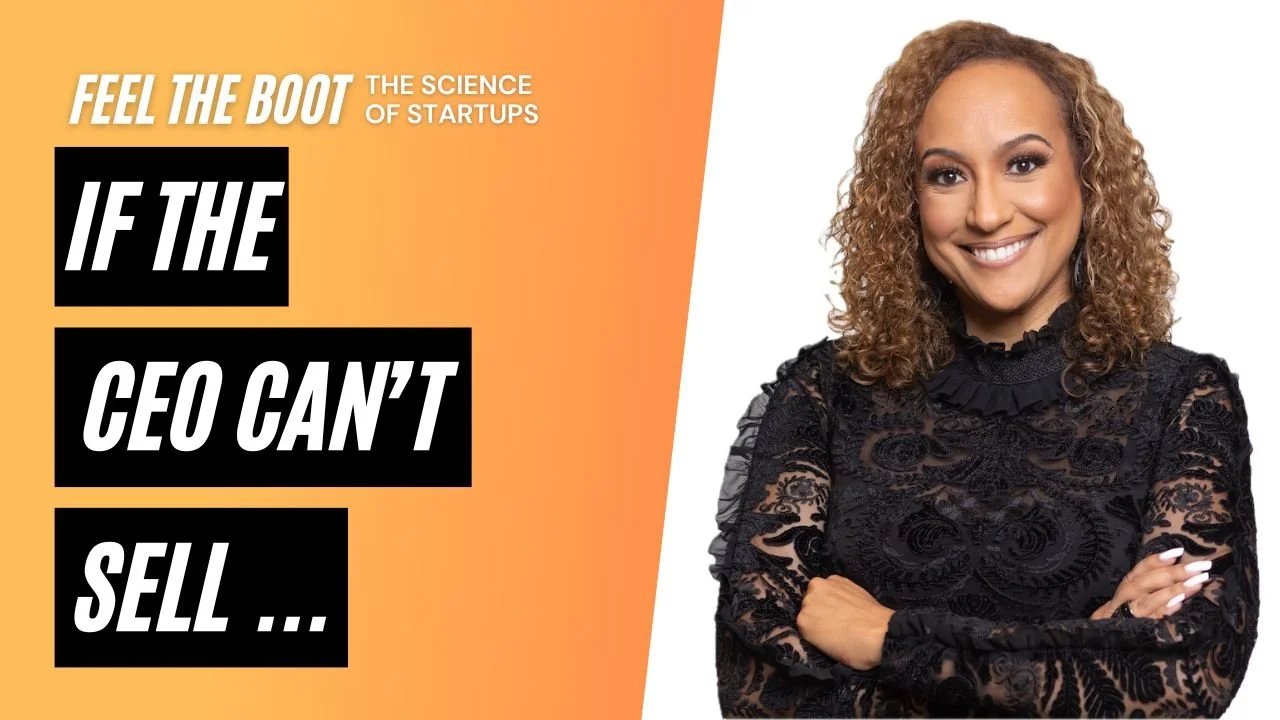
I recently sat down with Shayna Davis for a conversation that I think every technical founder needs to hear. Shayna is a leadership strategist who's spent 15 plus years helping leaders at companies like IBM, L'Oréal, and dozens of STEM startups learn how to show up with credibility in high stakes environments. She hosts The Influence Economy Podcast, which is ranked in the top 3% globally.
The reason I wanted to have this conversation is simple: I see the problem she's solving play out in nearly every pitch meeting I sit in as an angel investor. Brilliant founders, incredible technology, and a complete inability to communicate why any of it matters.
The Competency Gap Nobody Talks About
Here's something Shayna pointed out that I think is really important. Most technical founders don't even realize they have this gap. They're so used to being brilliant at what they do that it never occurs to them that external communication is a completely different skill set. And if they've been around for more than five to seven years, there was an era where it genuinely didn't matter as much. Strong product, right team, that was the whole formula.
That formula doesn't work anymore.
Shayna describes what we're in now as a "trust recession." When a new shiny object shows up every three hours, your company's reputation is being built outside of your product and outside of your internal team. It's being built by how your leadership shows up in public, whether that's in front of investors, on an industry panel, in the media, or even just talking to potential customers.
And here's the part that should worry you: if you're not driving that narrative, the narrative will be created for you. I can guarantee it won't be the one you want.
Features Are Table Stakes. Your Point of View Is Not.
Shayna told a story in our conversation that I think perfectly illustrates the problem. She went to a tech event with four panels: biotech, fintech, commercial real estate, and an investor panel. Roughly 24 people spoke over the course of the day.
Out of all of them, exactly one was actually compelling.
That one panelist drew analogies from his time in the Navy, shared where he believed the industry was headed, and talked about the dangers of not evolving how we lead. Sure, he mentioned his company, but that wasn't all he had. Everyone else just defaulted to features and benefits. By the third question, Shayna could already predict what they were going to say because they kept repeating the same talking points about what their company was building. They had nothing else to talk about.
Think about that for a second. If you're at an event or in a pitch meeting and the only thing you can communicate is what's on your website, you've already lost. Every other company in your space is also saying they're faster, more accurate, and better. Where is your competitive advantage if the only thing you can tell me is what's becoming table stakes for everyone?
It Starts with Leadership Identity, Not Media Training
Most founders think the answer is to get media trained or work on their presentation skills. Shayna says that's putting the cart before the horse.
Her framework has three layers: leadership identity, leadership branding, and leadership messaging. And she's adamant that you have to start with identity. Before the polished talking points, before you get camera ready, you need to answer one question:
As a leader in your industry, who are you and what do you stand for?
Without mentioning your company. Without mentioning your product.
Most founders can't do it. And that's exactly the gap.
This isn't about reciting your personal values like honesty and integrity. Frankly, the only people who make a point of talking about how honest and trustworthy they are tend to be the ones who aren't. What Shayna is talking about is your unique point of view about your industry: where it's headed, what has to change, what the dangers are if we don't evolve.
She calls it "the seasoning." The marketing language is fine. The talking points your comms team gives you are fine. What you're building is fine. But without your personal perspective layered on top, you're just another founder reciting a website. You want to be the person on that panel who has something to say beyond the third question.
Why Investors Care About This More Than You Think
This is the part I really want you to hear, because I see it from the investor side every single day.
Shayna talked to a group of tech investors recently who told her point blank: yes, they want to invest in a good product. But products come and go, and whatever the product looks like when you're pitching is probably going to look vastly different a year from now. More than a good product, what they're looking for is who's leading this organization. Investor confidence goes up when they can see the thought leadership of the people at the helm.
One investor on a panel she attended put it even more bluntly: if the CEO can't sell, and he didn't just mean sell the product, he meant sell themselves and sell the team and who they are as a company, he won't give them a dime regardless of how great the idea is behind the technology.
I've seen this play out as an investor too. You can sometimes tell that a company is hiding certain members of the senior leadership team from the conversation. They don't want to put them on camera, don't want to bring them to the meeting. That's telling. And when a company sends a designated advisor to pitch me instead of the CEO? Nope. That's not happening. I need to hear from the actual leader.
The Evolution of Executive Presence
Shayna has a really interesting framework for how executive presence has evolved over the decades. Back in the IBM era, she calls it Executive Presence 1.0: if you didn't have a specific reason to know who ran the company, you probably didn't. Then Steve Jobs came along and the CEO became the brand. That's 2.0.
Now look at someone like Jensen Huang at NVIDIA. It's not just him who engages well externally. His entire leadership team is visible and represents the company well in public. That's 3.0.
Shayna's question is: who's next? Because it's no longer just the CEO's job to represent the company. CTOs, heads of engineering, technical leads: these used to be purely internal roles. Not anymore. Everyone on your leadership team is going to find themselves in public facing moments, whether that's investor conversations, customer meetings, media interviews, or industry panels.
The only way you avoid this is if your company isn't growing. And if that's the case, you've got bigger problems.
Why You Need to Start Now, Not When You "Need It"
Most of my audience is early stage. Pre-revenue, maybe looking at a pre-seed round, probably without any real public presence yet. And this is where Shayna gets really passionate, because she sees the same pattern over and over: companies don't take external influence seriously until they get punched in the face. A PR nightmare. A blown investor meeting. A competitor who's telling their story better and poaching your customers and talent.
Quoting Mike Tyson: everybody has a plan till they get punched in the face. Shayna's point is to put a plan in place so you don't get punched in the face.
Think of it like exercise. You don't wait until you have a heart attack to start working out. The earlier you and your core leadership team start developing this muscle, the further ahead you'll be of every other company at your stage. Most of them won't think about this until it's way too late.
This doesn't need to be 85% of your time. Even 10 to 15% of your week dedicated to developing your external communication will put you in a fundamentally different position than your competitors. You have perspectives and points of view. You're just not pulling them out because you've never had to.
The Mistakes Founders Make
When I asked Shayna about common missteps, her first point was important: this is not about being performative or fake. It's about being intentional. You don't have to become someone different. You have to make sure who you already are actually shines through.
If you started a tech company, you almost certainly did it because you care deeply about a problem and you saw a void in the marketplace. That passion is already in you. It just needs to be surfaced and communicated deliberately.
The danger is inconsistency. If investors check your social media and your LinkedIn and find nothing that matches what you're saying in the pitch meeting, that erodes trust. As Shayna's grandmother used to say: everywhere you go, there you are. If your perspective shows up everywhere you go, it becomes what people expect from you and credibility goes up. If it only shows up in high stakes moments, it looks rehearsed and coached.
And she made another point that I think is worth flagging: your narrative should refine over time, but it should not be reinventing itself every 90 days. If you look drastically different every time someone checks in on you, you're eroding the trust you're trying to build.
Where to Start: The Dead Simple Exercise
Shayna's practical starting point is almost embarrassingly accessible, and I love that about it.
First, sit down with your core leadership team and answer this question: What is my unique point of view about our industry and where it's going? You need to be able to answer it clearly, in under 30 seconds, without mentioning the company or the product. If you can't, that's your first project.
A useful trick if you're struggling: ask other people on your team what you seem to be passionate about, what you tend to say all the time. Sometimes other people can see your point of view more clearly than you can. Or think about what pisses you off about your industry. If something aggravates you, what do you think the solution is? That frustration often points directly at your unique perspective.
Second, commit to one thought leadership post per week for 30 days. Not long. Not AI written. Two to four lines sharing your actual perspective on where your industry is heading. Do it on LinkedIn. Build the muscle before you need it.
Third, while you're at it, revisit your LinkedIn About section. If it's just a paragraph form version of the experience section below it, that's a missed opportunity. Use that real estate to communicate who you are and what you believe. Investors will look at it. Potential customers will look at it. Potential hires will look at it.
That's it. That's the starting point. Something anybody can do today.
The Bottom Line
Your product will not speak for itself. The sooner you internalize that, the better off you'll be. External influence, thought leadership, leadership identity... whatever you want to call it, this is no longer optional. It affects fundraising, hiring, customer acquisition, competitive positioning. Every area of your business.
Start small. Start now. Don't wait to get punched in the face.
Connect with Shayna Davis:
Follow Shayna on LinkedIn: https://www.linkedin.com/in/shaynarattler/
Get her free insights report on leadership identity, branding, and messaging for technical leaders: techinfluence.us
Free Fundraising Toolkit:
If you're getting ready to raise, grab the Feel the Boot Fundraising Toolkit. It includes the Investment Readiness Scorecard, Validation Blueprint, Pre-Seed Valuation Guide, and seven more tools to get your fundraise on solid footing: https://ftb.bz/raise
About Shayna Davis
Shayna Davis is a leadership strategist, STEM consultant, and host of The Influence Economy Podcast, ranked in the top 3% globally. With over 15 years of experience, she has helped global brands like IBM, UNUM, and L'Oréal and STEM startups equip their leaders to communicate with authority, strengthen external visibility, and represent their companies with credibility in high stakes environments.
Featured in more than 500 media outlets, Shayna is recognized as a trusted advisor for companies and tech founders seeking to position their leaders as visible, credible ambassadors who drive retention, reputation, and revenue.
Transcript
129 Shayna Davis interview YouTube
[00:00:00] Lance: If the CEO can't sell, and I don't just mean sell the product, I mean if they can't sell themselves and they, he can't sell the team or who they are as a company, I won't give them a dime regardless of how great the idea is behind the technology.
[00:00:16] Lance: Uh, today my guest is Shayna Davis. She's a leadership strategist who spent 15 and plus years helping leaders at companies like IBM and L'Oreal and numerous stem startups learn how to show up with credibility in high stakes environments. She hosts the Influence Economy Podcast ranked in the top three globally.
Shayna, welcome to Feel the Boot.
[00:00:35] Shayna: I'm excited to be here. I just love the name, feel the boot.
[00:00:38] Lance: You know, it's a, a motivating kick in the ass that we all need from time to time.
[00:00:42] Shayna: That's, that's my interpretation of it too. That's why I loved it.
[00:00:46] Lance: So a lot of founders, particularly technical founders, I think, uh, struggle with leadership and, and how to present themselves, right?
Their, their, their happy spot tends to be in front of a computer, you know, banging out code, building the tools that they're building. So what can you share about how they need to think about Yeah, this, how they present themselves differently?
[00:01:08] Lance: I think the first thing that I would say is. You and I noticed that a lot of them don't necessarily excel at when they have to engage externally, but I don't think a lot of them realize that it's not their jam because they're so used to being brilliant at what it is that they do.
And if they've been around longer than last, probably five to seven years, it may not have mattered as much. Many founders and technical teams come from the era where strong product and right team was the absolute. Only thing that you needed in order to have a successful tech company. And nowadays, when you look at the fact that we're in what people are referring to as a trust recession, and you know.
Companies are coming out with a, a, a new bright shiny object every every three hours. The perception and the reputation of the organization is being built outside of the organization, outside of the product and how great your team is. And so what I really want founders and technical leaders to recognize is that if you're gonna be seen as credible and trusted and not.
Having people look over at the bright shiny object that is gonna come three hours from now. You need to think about how you are engaging in those public arenas. Whether you're talking to an investor, the media, perhaps your people are on an industry panel, or maybe they're even just talking to potential customers.
Can they really communicate in a way that builds trust and can they really communicate in a way that. Gives them the ability to, to kind of, I don't wanna say dumb down, but communicate clearly those complex ideas that many of them are building because like you said, they're usually great at code building the thing leading their internal teams, but there's a different level of communication and, um, level of influence that has to be exhibited when you are in those external moments that matter.
[00:03:03] Lance: Yeah, I, I've even seen it in non-technical founders where they're. So expert in this particular niche that they're working in, they know their space so well. I think they've completely forgotten what it's like to not be an expert in that space and to try to communicate things in a direct way without jargon, without acronyms, without all of those things so that people can really understand what they're saying.
[00:03:30] Lance: So, yeah, and I think in addition to that, Lance. What talking points do you have, or what POV do you have beyond the features of the product? Because I oftentimes find that when leaders are representing their company externally, that they're really just relying on the features and the benefits of the product, or quite frankly, what people could find on the website or what the comms people maybe have asked them to memorize.
And in the environment that we're in now, like it's like want, want, want? Like that's not really helping me. To recognize that the leadership of this company is one that I really wanna get behind and follow. It's not really showing me like, oh, this is a company that I really want to come work for because you really have just said to me what it is that quite frankly, I probably already knew or could have just found on the website.
So what can you say and what point of view can you demonstrate beyond just what it is that you're building? Because that's one of the least important things in the environment that I think we're in now.
[00:04:29] Lance: This really ties into that authenticity and mission. People wanna be working with companies that they feel reflect where they're.
[00:04:41] Lance: Are they talking at all about like where the industry is, where the industry is headed, what they believe we have to be aware of in order for the industry to go where it needs to go or to avoid some of the things that we're concerned about. And product features alone don't necessarily convey that. And so I ask, I ask teams that I work with all the time, like, can you tell me what your point of view is about your industry or what you're building without referring to the company or without referring to the product?
Most of the times it's like, crap, no, I can't, and I might need your help to figure that out.
[00:05:17] Lance: So where, where do you, where do you recommend founders start on this journey? You know, what, what kind of communications?
[00:05:23] Lance: Yeah.
[00:05:24] Lance: Uh, should they be beginning with particularly, let's, let's start with kind of social media or public communications.
[00:05:29] Lance: Yeah. I think they have to first recognize that we can't just jump straight to communication training or media training. I do that, I offer both of those services, but I tell people that if. If I'm just gonna work on getting you camera ready or getting you mic ready, things still are not likely to translate and have the level of impact that you want them to have and you need them to have.
So I have kind of a three-pronged approach to the way that I address this. I. It's my belief, Lance, that we have to start with your leadership identity. So it's like before we get to the branding and the messaging, which is what people think they need, which they do, and they wanna jump straight to that, we can ignore the foundational work that needs to be in place first to make sure that we're really having the impact and influence that we're looking to have outside of our organization.
And it starts with, I refer to it as leadership identity, but you can distill that down and ask yourself, as the leader in this industry, who am I? And what do I stand for? And I want them to be able to answer that without referring to the company that they work for, without referring to the specific product that they've built.
Because they all have a perspective about the industry that they're in or the field they're in. They just don't. No, well, let me just say it this way. They haven't always had to think about either leading with that or weaving it in. And so I say, listen, before we start getting to the talking points, let's see your point of view and your leadership narrative as the seasoning to the conversation because it the marketing.
Language is good. What the comms team gives you is good. What it is that you're building is good. We're not throwing the baby away with the bath water, but we are adding some seasoning to what it is that we're communicating. And when you can weave in your personal perspectives, your personal, and we're not talking about your values of like, oh, I believe in honesty and integrity, yes, those things are great, but that's not what people usually want to hear when they're looking.
Towards a company for solutions, but give some thought to what is your unique point of view for either the industry that you're in or what it is that you're building so that you can layer that into your communication, and it actually will help to build trust and credibility and even authority as the leader if it's not just the bare bones.
Talking points that it's like, okay, after you've said those three, how are you gonna answer the next question? What are you gonna say in the next post? Are you just gonna keep saying the same thing over and over again? I certainly hope not.
[00:08:04] Lance: I'll get old. I like your point about not just talking about honesty or trustworthiness.
'cause frankly, uh, the only people who make a point of talking about how honest and trustworthy they are as the ones who aren't. So that's, I think, one of those things you always wanna be showing. Just to make this more concrete, uh, you know, obviously file the serial numbers off. I don't want you to name names, but can you give an example of maybe a specific, uh, person that you've worked with and what you suggested they do, how they change the way they talk, and the kind of talking points they started to introduce into their, their, yeah.
Public speaking.
[00:08:35] Lance: I'll use one of the ones that were probably becoming more and more familiar with these days, or hopefully we are. You could take a company that, um, is an AI company because. Frankly, I think all companies are becoming AI companies in, in one form or another. But let's just say you are the CTO of a SaaS company, or you're the CTO of an AI company, and your unique point of view may be that AI and technology should empower human potential, not diminish it or replace it.
Something as simple as that. And I think that's, that even that is becoming table stakes now. But let's just say for example, um. You work for, I'm making this up on the fly, but let's just say that you work for a consumer packaged goods company and you guys sell household products. Your unique point of view, view could be household products, should make a person feel a way, not just do a chore for them.
And so when you're, or you're able to say, you know what, listen, this is where this industry is headed. Only the companies that recognize that you have to do A or avoid B are going to be on the competitive side of where this industry is going, and those that don't are gonna end up obsolete. Like those are unique point of views that a leader likely has that they either.
Don't think they should weave in, or they've just never been told to, which is why they default to, well, at my company we're building X, Y, and Z and it's gonna be faster and it's gonna be more accurate. And it's, and it's like, okay, but I just read the website of 40 other companies today and they're all saying they're fast and they're all saying they're accurate.
So where is your competitive advantage, or how do you become, come across as more credible or more trustworthy? If the only thing you can tell me is what I'm starting to see are the table stakes for all companies.
[00:10:36] Lance: And so, and this sounds a lot like thought leadership kinds of communications. You're, you're framing the bigger picture.
Uh, and so your, your point is that when people see you doing that, it gives them more confidence in the company. 'cause it indicates that you have a deeper understanding of the space or how does that then it
[00:10:53] Lance: does
[00:10:53] Lance: come into the feedback loop.
[00:10:55] Lance: It translates in a lot of different ways for companies that are looking for funding.
Investor confidence goes up when they can have a behind the scenes look at who's leading this company and not just an under the hood. Look at what it is that they're building. And I had a conversation just a few weeks ago with a lot of investors who invest in tech companies who share the sentiment of, yes, I wanna invest in a good product, but products come and go and what the product is gonna look like a year from.
Now is probably gonna look vastly different than what it looks like when you're pitching the idea to me. So more so than a good product, because those are a dime of dozen. I'm really looking for who are the people that are leading this organization and my confidence as the investor goes up. When I can see the thought leadership of the people that are leading this, it also shows up in top talent.
High performing leaders have options of where they're going to go to work, and again, if the only thing you're gonna sell them on is what you're building, they're probably in conversation with three or four other potential companies that they could go work for. That is building something great, but the stories that you tell and the thought leadership that you demonstrate, and all of that seasoning that I call, that I, that I refer to, when you start to layer.
That in that makes them go, you know what, this is a company that I really wanna get behind and work in. The same thing with customers. So we really can't envo, we can't afford nowadays for our leaders to be either invisible, whether they don't think they have to. Have it have, you know, be publicly visible at all, or when they are visible, you can't afford for them not, not to be credible or else it's gonna be very difficult to win going forward.
When every company is being disrupted by technology, they're in a war over talent. And we're also being, um, you know, affected by trust recessions as well. It's gonna be very difficult if your leaders are invisible or visible and not credible in, in these ways. It's gonna be tough to win.
[00:12:57] Lance: And I really hope that the audience heard that one loud and clear.
The, the idea that investors bet on the team, they bet on the leadership, and being able to demonstrate that you've got that, that what I call unique insight. You understand the. Space that you're in, in a way that's profound and maybe different, deeper than other people have. That's what allows you to survive the pivots and, you know, create that new product, succeed in the market.
Uh, absolutely essential, as you said, both to fundraising, but also I think to hiring and, and all other aspects of things.
[00:13:33] Lance: It affects, it affects every area of the organization in one way or the other. Some more costly than others, but there is an opportunity cost to ignore this one way or the other.
[00:13:44] Lance: I think a lot of founders forget, especially technical founders, that at the end of the day, as the company grows beyond just being three guys in a room, they, their real job is communication and cheerleading and inspiring, and that is the most important thing that they can be doing day to day.
[00:14:01] Lance: When they get further along in their funding rounds and in their growth, when they start to especially get to like series B and series C and closer and closer to IPO, they're going to be in the media. Their leaders are going to be on industry panels, and if they're not driving the narrative, the narrative will be created for them.
And I can guarantee you it's not gonna be the narrative that you want to be out there about yourself and and your organization. And you can't just be smart at what it is that you do. I've worked with companies that I'm like. I'm deeply entrenched in this organization and I have no idea what you're talking about right now.
So imagine the people that are on the outside looking in, or if you're just not showing up publicly at all and your competitors are, I, I, I ask people all the time, how have you helped your competitors lately? How's that feel?
[00:14:49] Lance: I like that. Four. Most of my audience is early stage founders, so typically maybe pre-revenue, just looking for pre-seed round, usually without any real public presence.
They don't have a lot of social media awareness. They're not yet perceived as thought leaders in their space. How do they kind of cross that chasm? I, I can really see how to apply this when you already have some visibility, some presence, but that first step seems to be a big challenge.
[00:15:18] Lance: So Mike Tyson has a quote.
Everybody has a plan until they get punched in the face. I wish that more companies at the level of growth that you're talking about would put a plan in FA in place so that they don't get punched in the face. Because what I find happens is, is that many companies, unfortunately, I hope if you ask me this a year or two from now, I don't have the same thing to say, but many companies don't even take what I'm saying seriously or don't even think they should have a conversation with me until a.
They have a PR nightmare or until they've been punched in the face. And so I wish that companies would start to think earlier. It's let, let's from the very beginning start to think about developing our leaders in this way. Because when you're pre-revenue or when you're in your early seed stages, if you're, if you're getting um, funding, you're often thinking about refining the product, thinking about your go to market strategy, and you put.
Off thinking about public perception or how your core leadership team is being developed in that way until you need it. Well, just like we, we are told that we should exercise and eat well to prevent poor health. We also should begin to develop these muscles because. Public visibility is going to happen at some point or another.
So start develop the, the faster you as the founder and your core leadership team can begin to start thinking about themselves in this way and developing this muscle. You are gonna be light years ahead of all of the other companies that are starting alongside of you because most of them are not thinking about it until it's until it's way too late, which is why I love going to the incubators and the accelerators going, I know you don't see.
Think that you need this yet, but please do me a favor and start thinking about this now. Doesn't have to be 80% of your time, but can you at least begin to think about the trajectory of where your company is going and develop this muscle early on?
[00:17:21] Lance: Yeah. Uh, treatment is always more expensive than prevention and crisis remediation.
That means you've got a crisis, bad things are happening, and
[00:17:29] Lance: it's more expensive to fix it after it's broken than it is to not allow it to break, to be, to, to begin with. You know, like I said, even if you think about, um. Companies that are in stealth mode, they're probably not posting a lot on social media, et cetera, et cetera, because they don't want everybody to know what it is they're doing until it's time for them to do it.
Well, what happens when. The founder comes to you and says, you know what? I think we're gonna have to start having some conversations with the target market that we're building this for. Or, you know what? We're probably gonna start raising funds soon and I'm not gonna be the only one that's having conversations with investors.
You don't want them to like. Pass out and turn ghostly white like the teams that I've worked with, because they know that that's just, there's usually a competency gap and outside of their comfort zone. So begin to develop them in that way so that when they are posting on social media, when they are having conversations, even with a focus group, that they actually feel equipped to be able to do so.
[00:18:32] Lance: Interesting. And so a lot of that then is, is. Helping them develop some of that comfort in terms of how to talk, what to talk, what not to talk about, how to frame things in a way that, that sort of casts things positively and is easy to understand.
[00:18:45] Lance: Yeah. And one of the exercises that I give teams, or, and I even give as um, suggestions when I'm on podcast is that I want the founder and the entire core leadership team to answer the question, what is my unique point of view about our industry and where it's going?
If they can't answer that clearly. Succinctly meaning in less than 30 seconds without mentioning the company or mention what it is that you're building. You guys need to get together as a think tank and figure out what that POV is so that you can begin to, I don't wanna say practice it because you don't want it to sound rehearsed, but so that you're, you're starting to see yourself as a thought leader, and you're actually starting to identify what your own unique thoughts and point of views.
Are about where you are and where you're going, because those are the types of questions that are gonna be asked, and those are gonna be the types of things that is gonna help you be credible. I was at an event, Lance, about a month ago, and there were four different panels. There was a biotech panel, a, a FinTech panel.
A commercial real estate panel and an investor panel, and there were anywhere between three to five people on each of those panels. So throughout the course of the day, let's just say there were 24 people on panels. Out of those, let's call it 24 people, there was one person that I didn't feel like needed to hear this conversation.
He gave, he gave analogies of how, where we are and where we're going was, you know, likened to when he was in the Navy and different strategies they had. He shared where he feels like we are and where we're going and what the dangers are if we don't learn how to lead D, you know, all of these different things.
And not that he never mentioned his company or what it was that he was building, but there was not one other person. Out of the couple of dozen people that spoke that day that I felt like didn't need to hear this conversation that we're having, because every question that was asked, they default it to.
Well, the bells and whistles aren't ours or the, what we're building at our company or, you know, what's coming next at our company. And it's not that those things aren't valuable, but after a while, by the time they got to the third or fourth question, I could always, I could already tell what their answer was gonna be because they just kept saying the same thing about the features and about the company over and over and over again, and they had nothing else to talk about,
[00:21:10] Lance: which isn't really serving the audience, right?
The audience is there for a certain kind of information and content. Uh. I've always thought it, it, it's really useful to talk about the problems and the issues that are addressing the, the space. It kind of goes as without saying that I have a solution that you can buy from me when I'm talking about this endlessly.
But I don't even need to say that.
[00:21:32] Lance: You know, one of the things that fascinates me and, um, I use that term not in a positive way, it fascinates me that I go to events where. It's either an all day event and, and I, I'm pretty much all in the tech space. I do work with other types of companies that they come to me, but in terms of my outreach, I only target STEM companies.
Target is not a great word, but I only have outreach to STEM related companies because I know that technical leaders are the ones that usually struggle with this the most, and. It fascinates me when I go to an all day event or a multi-day event, and everyone's talking about how innovation is happening and tech is growing and not one conversation ever says anything about the fact of how.
We lead these companies is going to also have to be on pace with the innovation and with the technology. And that blows my mind that we're still living in the old era of as long as we have a strong product and we have the right internal team, that's all we need to have. So no one thinks that we're also going to have to lead differently.
If everything else around us is growing at fast paces, it just blows my mind.
[00:22:42] Lance: If you're getting ready to raise money for your startup, I've got something for you. It's the free startup fundraising toolkit. It's got currently 10. Always adding new ones, different tools to help you with your raise. These are the same tools that I use in my workshops and with my paying clients.
You might wanna start with the funding readiness assessment. It's a checklist that allows you to see whether you are in a position to start talking to investors now, or whether you have some more work to do. Lots more great stuff in there. You can
[00:23:11] Lance: get it all@feeltheboot.com slash raise. That's feel the boot.com/.
Now back to the conversation.
[00:23:19] Lance: So the first step you said for startups, people who really don't have anything there is, is to be thinking about, yeah. What, what is their unique insight? What do they understand about this? Getting some of those talking points and understanding that the, the messages that they want to get across, where should they start deploying that?
Is this something that they're gonna be deploying on their personal social media or discussions? Is it mostly on the, on the corporate, is it mo in meetings first? How do you suggest people get that ball rolling?
[00:23:47] Lance: Think everywhere, number one, because I believe that repetition is the mother of mastery, and I believe that the more places you have those conversations, the more comfortable you become having those conversations, and then it becomes a conversation and not something that makes you sound robotic.
I also think that even though we're talking about how this impacts the company externally, when you're looking to get picked, paid, and promoted inside of an organization. When you're seen as not just a doer, but you're seen as a strategist and a thinker and you're actually sharing your point of view, it actually helps you to get to gain more recognition even inside of your company as well.
And so, although I don't focus as a firm on, you know, the impacts of, of internal organization, but being able to develop this level of authority. Is going to help you inside of your organization and outside of your organization. So I hope these conversations are as relevant around the boardroom table or just in your scrums in the morning.
I hope that they're as relevant there or that you see that they're as relevant there as they are. If you're on an industry panel, if you're on a podcast, or if you're even just thinking about something that you post on your social media.
[00:25:04] Lance: I think about someone like Steve Jobs, who was a master of this, and it really pervaded everything.
You know, it affected employee retention and hiring and all aspects of what they were doing, including, you know, sales people bought from Apple in large part because of the aura that he projected.
[00:25:21] Lance: I'm so glad that you brought him up. I wrote an article and I, I was talking about executive presence 4.0. Um, first of all, I don't like the term executive presence because I think that it's outdated and it, it, it typically only refers to like how you show up with poise and polish and what kind of clothes you wear, and I just think that that's not really as relevant in today's age.
But I talked about. Back in the IBM days, I called that like executive presence 1.0. If you didn't have a reason to know who was leading IBM, you probably didn't know who was leading IBM. And then if we fast forward to executive presence 2.0, that's when Steve Jobs came onto the scene and the CEO was kind of the brand, right?
And then. If you look at where I think we're now in Executive 3.0, you look at like the CEO of Nvidia. I get his name wrong every time and I always promise I'm gonna do better and I'm probably still gonna screw it up. But Janssen Wong or Jensen Wang, or however you pronounce the CEO e's name of Nvidia.
It's not just him that makes sure that he knows how to engage well externally. He makes sure that his entire leadership team is visible and knows how to represent themselves well externally. So when I think about where we're going for executive presence 4.0, my question is who's next? You know, the CEO is no longer.
Shouldering all of the responsibility of representing the company. It's now becoming part of the job that if you look at like CTO Head of Engineering, there was a time where those were not. Public facing roles, those were not forward facing roles. But now companies are having to have their entire leadership team.
Sometimes they're in conversations with investors, sometimes they're in conversations with potential customers, potential hires. I. Outside of their department. And so it can't just be the founder that knows how to communicate well outside. Everyone has to be able to do that. It's just part of the job now and it's not going away.
So you're not gonna just be able to be brilliant and keep your head down and geek out building the thing. You're going to have to learn how to, I. I'm gonna say perform, for lack of a better word, in these public moments that matter because you are going to find yourself in these public moments unless your company is not growing and if you're
[00:27:42] Lance: not.
Right, right, right. The only way you avoid this is failure.
[00:27:44] Lance: Correct. If you're not finding yourself where you and your leadership team are in public facing moments like media, industry panels, social media conversations with customers, then you're probably not growing and you might wanna shut your doors down anyway.
[00:28:00] Lance: Yeah. I know as a, as an investor, when I look at a company, you'll sometimes really be able to see that they're hiding certain members of the senior leadership team from talking to the investors. Like they don't wanna put them, uh, on camera, they don't wanna put 'em on the Zoom, they don't wanna bring 'em to the meeting.
And that's telling, right. It really makes you worry a lot about who those people are or see companies that wanna pitch me as an investor. Then they've got some designated advisor trying to pitch me rather than the CEO. I'm like, Nope, that's, that's not happening. This, this person needs to be able to communicate the message.
Clearly not.
[00:28:35] Lance: I've heard where, you know, like by the time the company gets like series C or whatever, sometimes they may have some placement agency or advisor that is going to secure funds for them so that they don't have to do kind of the dog and pony show, if you will. But early on, that's not what. It's going to take, you know, you're, I don't know anybody that's gonna give you any money if you're sending someone else to represent you.
I actually asked one of the investors on the investor panel a few weeks ago about how important this was, and they said, number one, if the CEO can't sell, and I don't just mean sell the product, I mean, if they can't sell him sell, and they, he can't sell the team or who they are as a company, I won't give them a dime regardless of how great the idea is behind the technology.
[00:29:17] Lance: It's so true. It, it's gotta be that, that individual connection out there, and I mean, I, when I sold my company, I had an investment bank, right? You have bankers who are helping you with this, who help facilitate and move things, but it's always face to face with the management team, with the buyers, with the investors.
That's, there's never a time that, that's not the most important.
[00:29:39] Lance: Absolutely. Absolutely. So again, I, I want companies to start paying attention to this sooner. You know, it's not just about what you're building and how you're gonna get it to market. This is just as important if sometimes there's some situations where it's even more important.
You know, you find yourselves in a conversation where, you know, let's just say the media is interviewing you and how. Bad. Would it be if the media has now created a narrative for you or your company was not seen in the best light and it had the best product that is on the market? That would just be a shame.
[00:30:13] Lance: So how do you recommend that founders shift their mindset as they go from stealth mode, you know, in a room building the product, to now they're needing to be front and center. They're trying to raise money, they're trying to promote the the solution. Talk to media, talk to customers. Hire new people, they're starting to build a team.
What, what is that mental shift that they need to take and how can they, how can they help embrace that?
[00:30:39] Lance: I think the mental shift can be as simple as it has to be done. It's not optional. It's a necessity. And I think one of the things that they can start doing is being intentional about putting these things out there before you think you're ready or before.
It's on someone else's dime. And what I mean by that is, you know, go live and create your own industry panel. Sit down and think about what can you post one time a week. I'm not asking you to become an influencer. I hate the term. Think about what can you and your team post at least one time a week that is not talking about the company and is not talking about the product, but is actually sharing your perspectives and your point of view about where we are and where we're going and what it's gonna, what it's gonna take to get there.
And so that way when the media comes knocking or. The investors come knocking, or you find that you have to be on an industry panel or at a luncheon. Um, because sometimes you show up at these things thinking that you're just gonna be in the background. And before you know it, some, you know, someone's asking, asking you questions, and you didn't even, even, um, intent that wasn't your intention for being there.
So start creating some of these scenarios intentionally, because you can start putting some of that narrative out there on your own. And it's just great practice because nothing sounds worse than if you're like, okay. Shana says that I need to have my unique point of view. I have to do it in less than 30 seconds.
I can't talk about this. But then it still comes across like a robot instead of conversational like you and I are have, are having today. So if you can be intentional about crafting or simulating what you think some of these conversations are gonna be, let's say, okay, what could the conversations be with investors?
Potential hires, potential customers, all of the different formats, and then start roleplaying and having those conversations, you'll be able to tell where you still need practice before you actually need it. And then obviously you can call somebody like me that can help get y'all together too.
[00:32:51] Lance: That's a great one.
Yeah. Uh, prioritizing it, making it. Clearly part of your job I think is, is so important. I talk to a lot of founders who seem to regard this kind of communication as a distraction or inconvenience from their job instead of a core aspect of their job that is inherent to everything that they need to be doing.
[00:33:11] Lance: It's sometimes the fuel behind. The machine, you know, you're building the moat, you're building, you know, your, your product, but sometimes this can be the differentiating factor between you and your competitors. And I always say that, you know, like many companies are going to start taking this more and more seriously.
And if you don't, then your competitors are gonna continue to poach your customers. Your competitors are gonna continue to poach your top talent. They're gonna continue to have a competitive advantage. The more and more the world progresses and the more and more technology progresses. And so, you know, if you're going to go on to B to business, then why not think about all of the things that could, poten could potentially make you successful or keep you from being successful.
And again, I'm not at all recommending that this has to be. 85% of your focus, but I do think that 10 or 15% of your time in the run of a week should be dedicated to get, because guess what? You have these perspectives. You're probably sharing them. That's a great exercise. Ask other people on your team, what are the things that I seem to be passionate about?
What are the things that I see? I tend to say all the time because I'm struggling to have a bird's eye view to kind of see what my unique. Point of view is I bet you they, they hear 'em, you have perspectives. You're just probably not pulling them out because maybe you've never had to. So just start being intentional about it.
[00:34:37] Lance: I love that. Yeah. And, and often other people can see things that we don't. I think that's why coaches are such a useful tool. Is it, it's easy to get those, those blinders on.
[00:34:46] Lance: Yeah. Or the things that piss you off. The, the things, the things that aggravate you. Think about if this aggravates me. What do I think the solution is?
You, you know, like it, it could just be something as simple as, man, it really aggravates me when other engineers do X, Y, and z. I go to these conferences or whatever and where I really think we have to change as engineers is like, you have those perspectives. You just probably are not thinking about it in this way.
So.
[00:35:16] Lance: When founders are trying to put themselves out there, I think there's often a sense of imposter syndrome. They're worried about whether they have the credibility, they're trying to establish credibility with other people. What are some mistakes that you see people make and what seems to work well?
[00:35:32] Lance: I think the first mistake is outside of just ignoring this altogether, but I think the first mistake is, is that this is not about being performative, and this is not about being fake.
It's about being more intentional. So I'm not saying that you have to become someone different or you have to start acting different or dressing different. Be who you are. But be intentional about making sure who you are and why you do what you do shines through. There's an old saying that like, people don't care what you know until they know how much you care.
The way that that translates here is more than likely if you're a founder and you've decided to start a tech company or build some form of tech, you usually do it out of some form of passion or some form of void that is in the marketplace, and you have a personal reason why you want to fill that void or why you want to create a solution for this problem, whatever that is.
Is within you, it just needs to be brought, brought out because I don't, I haven't met many people that say I went into, especially this type of business, like building a tech and getting a tech company off the ground and to success is no small feat. And I don't know most people that don't do it because they don't care deeply about what it is that they're building or why they're building it.
So I always ask myself, can I tell the world who I am and what I stand for? It's usually related to what it is that I've decided to build, what we believe we build and but, but we don't always necessarily think about those things in the same boat.
[00:37:14] Lance: I like that and it's a great opportunity to talk about the mission and purpose and things like that.
I find in, when people are pitching investors, they often spend too much time talking about that, but we are looking at their social media, we're looking at their presence online. That's the time to allow those things to shine through. And in the 10 minutes you have to talk about your company, right? You know, focus in more on the, it's gonna more bolt
believable
[00:37:34] Lance: as well.
Because it's, it's gonna be able, it's gonna be easily recognized that this is part of the DNA of this organization. This is not something that they just decided would be a good talking point because someone coached them that this is what you have to say in the first seconds of an of a, of a funding presentation.
They're gonna already know that and it's gonna line up. My coach always says, does the tongue in your shoe align with the tongue in your mouth? Are they going the same direction? And so if what you're saying in these moments that matter is what they have already come to expect from you, that's when credibility goes up.
That's when trust goes up. But if the only time I hear you speak about something in a certain way is in public moments that matter, these high stakes conversations. But if I check out your social feed or. Have a conversation with you anywhere else. It doesn't show up. My grandmother used to say, everywhere you, everywhere you go, there you are.
So if everywhere you go, you start showing up, sharing your perspective and what it is that you believe and where it is that you feel like we're going, that's what we're gonna come to pers to expect of you. And it's gonna help to create that narrative. And then you don't have to even think about it because again, everywhere you go, there you are.
[00:38:46] Lance: I like that. Right. It, it just shows authenticity. 'cause everything is consistent, every, every utterance lines up and is, uh, congruent with all of the other things that you're
[00:38:54] Lance: saying. Yeah. And it may refine over time, but it should not be changing drastically. Like every time I, you know, if every 90 days I check out your social feed, or every 90 days I see you on a different.
Stage and it's drastically, drastically different than what it was before then you're, you're doing the opposite of what we want. You're actually eroding trust. I should see refinement, but I should not be seeing constant reinvention every time I hear you. Ma, open your mouth.
[00:39:21] Lance: I like that. Uh, do you have anything that you can share with this audience?
Anything that they should be looking for? Any tools that they could use?
[00:39:29] Lance: Absolutely. So, um, I would say if you're not already, the first thing I would ask you to do is to follow me on LinkedIn, because I always share a lot there. I'm Shana Rattler Davis on LinkedIn, and then I also have an insights report.
I talked about the three-pronged approach that I have to how we address this. It's leadership identity, leadership branding and leadership messaging. And we only talked about. Out a couple of those, or maybe even one of those. But if you go to Tech Influence Us, you can get a full insights paper that I wrote where I go into all three of these things at length.
And so you and your teams can start to absorb what's in that insight report and actually begin to develop yourselves in your team in a greater way.
[00:40:10] Lance: Fantastic. And I'll put a link to the, uh, to your LinkedIn profile and to that tool down in the description here in, in the blog that's gonna be associated with this.
So if you had advice. First concrete step. Someone wants to begin on this journey. Journey. They've listened to us, they've embraced the need to be more intentional about their communications and leadership. Where should they start?
[00:40:32] Lance: Just pick one area that you can start to show up in. The most natural and the most easiest is.
Social media. So I would say set the intention that for the next 30 days, every week, at least one time a week, you're gonna put out a thought leadership post. It doesn't have to be long. It doesn't have to, I don't want AI writing it, right? Like just share. Two to four lines that demonstrates your thought leadership.
Do that one time a week for the next 30 days so that you can begin to build this muscle. And then once you and the team have gotten accustomed to that, that's when you can start to look at, you know, how do we begin to, um, make sure that this bleeds over into other. Public facing moments because you may be at a PO point in your company where I'm not on any industry panels.
I'm not being interviewed by any media, so that's not relevant. But every single person on your team should have some. Fingerprint, if you will, on LinkedIn. And I would also say that in addition to these posts, I want you to revisit your about section on your LinkedIn. If your about section is just paragraph form of the CV that comes below it in the experience section, that's a missed opportunity.
You should use your about section to actually. Have sentences about who you are and what you believe in and all of the different ways that we've talked about today. Because in the experience section, it's gonna show where you've worked, what your title is and what you've done. Too often I see us just using that it.
Of paragraph forms where we're just writing out what they're gonna find in the experience section. And I think that that's a, a missed opportunity. That's great real estate for you, for you to use to begin to develop your thought leadership and, and for people to be able to see what your unique point of view is.
And that's gonna help you in all of the different areas that we talked about. It's gonna help you raise more money because investors will go look. At your social media and probably will look at the social media of your core leadership team, potential customers are going to do that as well as will potential, um, talent that is looking to come to work for you as well.
[00:42:45] Lance: I love it. That's so accessible. Nice low hanging fruit. Quick change to the, uh, LinkedIn profile, and then really simple short posts. It doesn't need to be paragraphs, it doesn't need to be pages, it doesn't need to be earth shattering. But just the insights that you've had. I love it. 'cause that's, that's attainable.
That's like starting an exercise regime. Yeah. You don't wanna start by trying to run a marathon. You need to be building up to these things.
[00:43:09] Lance: Yeah. Something that anybody can do today. That's what I always wanna leave you with.
[00:43:13] Lance: Fantastic. Any finding close closing thoughts?
[00:43:17] Lance: Yeah. Like Mike Tyson said, everybody has a plan till you get punched in the face.
Don't wait until you get punched in the place, in the face to creatively and create one now.
[00:43:25] Lance: Fantastic. Thank you Shana, so much for coming on. It's been a pleasure talking with you.
[00:43:30] Lance: Thank you for having me.
[00:43:31] Lance: I love this conversation with Shania because she talked about some hard truths that founders need to hear first, that your product will not speak for you.
You need to learn how to communicate what you stand for, what your company's about, and do it internally and externally early. You need to start practicing that now, not when it's already too late. And the fact that investors are judging you as much or more than the products you're building, they know you're gonna pivot.
This is something I see every single day. Now if you're looking to raise money for your startup, don't forget to go grab my free startup fundraising toolkit@feeltheboot.com slash raise. There's 10 different tools in there. Maybe if you're watching this later, there'll be more. They're all incredibly valuable.
I highly encourage you to go grab those. If you found this conversation interesting or useful, please do the usual like subscribe and ring that bell and make sure you get informed every time I drop new episodes, and it makes a huge difference. To the channel. I'd really appreciate it, and until next time, I'm Lance Cottrell Chow.