Three grape buyers said yes. Buyer 1 took a quarter of the crop. Buyers 2 and 3 took nothing.
It looks like most of the grapes in my vineyard are going to rot on the vine this year, and the reason is kind of embarrassing.
I had commitments from three different buyers. At the end of the day, one of them took a quarter of the crop and the other two took nothing at all. And it's sort of my fault.
I took my foot off the gas when I should have kept pushing for buyers, because I had people saying yes. Vineyards aren't startups, I know that very well. But this pattern shows up all the time: you hear an answer, take it for more than it's actually worth, and then act on it in a way that hurts you.
What makes it embarrassing is that I'm president of the North Bay Angels. I look at around a thousand startups a year and spend a lot of my time teaching founders how to read these signals. I still got it wrong, in my own business, this season.
I call this happy ears
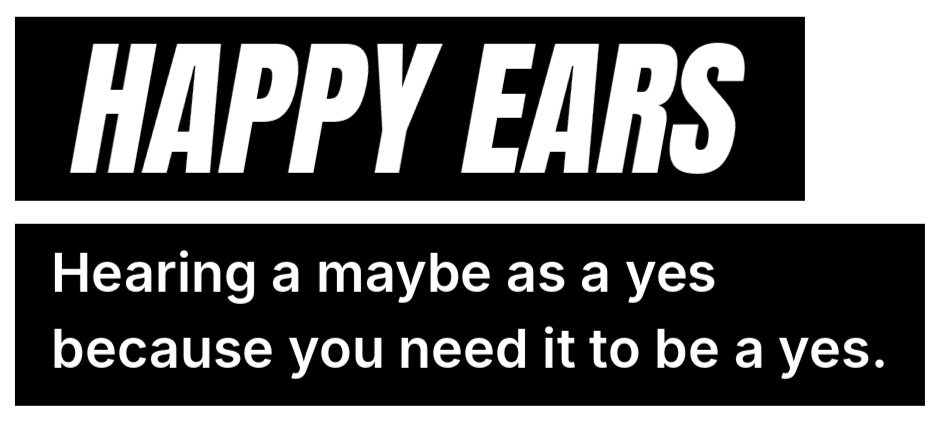
Someone gives you an answer that's tentative. Because you so want it to be solid, you treat it as much, much stronger than the person ever intended.
Fundraising is full of it. I'll say to a founder, "Hey, send me your deck," and the founder thinks, "Wow, this guy wants to see my deck. That must mean he's really interested in my company." What it actually means is that there's less than a 2% chance I end up investing. (If you want the full breakdown of the odds at each stage, I walked through it in the last episode on the real odds of getting funded.)
You're already doing it
I can hear a lot of founders right now. "Sure, that applies to those other companies that aren't building anything good. I'm building real gold here. When an investor sees my deck, they're going to get serious and move right to the finish line."
That thinking is exactly the problem.
You're inflating the odds in your own head because you need that money, you need that deal, you need it to be true. Notice what just happened: you accepted the number as true for founders in general and exempted yourself in the same breath.
It reminds me of a big lecture class in college. The professor looks out at 200 students and says, "Only one person in this hall is likely to be worth $10 million in 20 years." Everyone looks around and thinks, "Wow, it sucks to be you suckers." In all probability, nobody in that room has better odds than anyone else. Everyone still wants to exempt themselves.
And I did it with my grapes, and I'm the guy who sees this every day.
Customers do it to you too
Customer validation is where most founders first catch happy ears, usually without noticing.
You've built a product, or better yet you're thinking about building it, and you're interviewing potential customers. "Would this be useful to you? Would you like to have something like this?" They say, "Yeah, it would be great to have something like that." You check the box: this person is going to be a customer.
Not so fast. People want to be friendly to founders. They want to be supportive. And honestly, they might like to have it. But there can be all kinds of reasons they never buy, and "would this be useful?" costs them nothing to say yes to.
What happened at Anonymizer
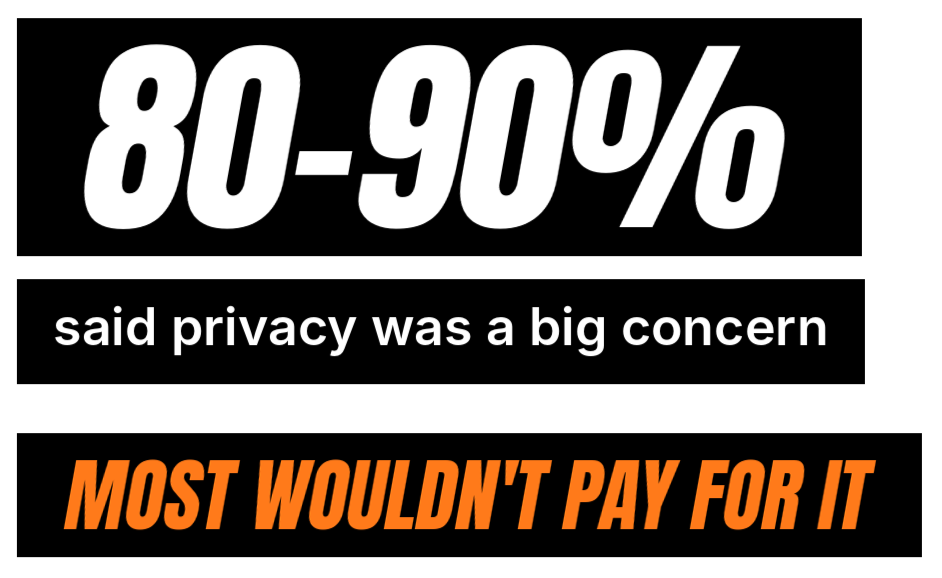
Back when I was running Anonymizer, I looked at surveys saying something like 80 or 90% of people considered privacy an enormous concern. So I figured most of them would pay for a privacy service.
Wrong assumption. Most of them didn't.
I got early adopters, people who were paranoid or passionate about privacy. But there was no way I could cross the chasm with that business model, because the mainstream was willing to sell out their entire privacy for a 10% discount. They weren't really willing to take on any inconvenience at all.
It's still happening
I'm currently advising a B2C company in the fashion space. Their surveys of target customers say 80% desperately want to solve the problem the company is solving, and there really aren't any alternatives. Nobody else is addressing it.
Now that the application is up and running, only about 10% of the people who land on it engage beyond that first visit. They all say it matters a lot. They're not acting like it.
The four things that stall a sincere yes
So how do you tell a customer who's going to buy from one who's just expressing support? You dig into the four things that most often stand between "yes, I'm interested" and an actual purchase.
1. Priority
Out of everything they could spend money or time on, is your solution the next thing they want to do? Or the one after that? If you're number five or later, realistically they're never getting to you. It would be useful. They're still never going to implement it.
2. Integration
What's actually involved in implementing your solution? Is onboarding a lot of work? Does it need to connect to other tools? Are there training issues? Maybe you don't even have an interface to the kind of data they've got, which makes you impossible to use even though you'd be useful if they could.
Explore these deeply. You want to understand what's going to blow up a deal before it blows up the deal.
3. Internal opposition
You're talking to one person, and they're saying, "Love it, definitely want this." But other people in that company may not.
Maybe your product eliminates a bunch of positions, and the head of that unit doesn't want to see his authority shrink. Maybe it's a lot of work for someone. Maybe security flags it as a major vulnerability. Maybe the CFO doesn't want to depend on a startup that could blow up in six months and need replacing.
You need to understand what all of them think, not just your champion.
4. Budget
Can they even pay for this? Is there money set aside? This becomes a huge issue in enterprise and larger B2B sales. Wanting it isn't enough unless there's a bucket of money for this kind of purchase, or you're cheap enough to fall under someone's personal spending authority.
Someone saying yes doesn't mean yes. It doesn't mean they're lying to you either. You just haven't explored all the obstacles in the way.
The same four things kill investor commitments
Priority. They may simply have better deals in their pipeline right now. On another day they might invest in you, but there's something else they'll fund first, and that puts you on the back burner.
Integration. There may be a structural reason they can't invest. A common one is that they've already backed a competitor, and investing in you would be inappropriate.
Other stakeholders. Your investor may be genuinely excited and want to write the check, but they may not have the final say. They might need to run it by partners, an investment committee, or their spouse before they can give you a real yes.
Budget. For investors, budget is the capital they have available to invest. A lot of investors will look interested whether or not they have any left, because they want to see the deals out there and keep a finger on the pulse of the market. Taking your meeting costs them almost nothing.
None of these people are lying to you. What matters is figuring out whether one of these four is the reason your investments aren't closing.
How to find out which one it is
Each blocker has a question that goes with it. Some you can ask up front. Others only make sense after a deal has gone quiet or died, and they're still worth asking, because the answer tells you what to fix before the next investor.
Budget: "Are you actively deploying capital right now?" Ask this one early in the process, before you spend weeks on someone with nothing left to invest.
Priority: "How do we stack up against the other companies that have made it this far?"
Integration: "Is there anything external preventing you from investing in us?" Or, once it's over, "Was there anything external that prevented you?"
Other stakeholders: "You seemed bullish on us. Who shut the deal down, and why?" While the deal is still alive, ask who else needs to sign off before it's a real yes.
Hiring works the same way
At Anonymizer, I hired a VP of sales out of North Carolina. We were in San Diego. The day he was supposed to start, he never showed up at the airport.
His wife torpedoed the job at the last instant, when she saw they'd be trading a huge house on acreage for a tiny bungalow. He'd said yes, and as far as I know he meant it. He just wasn't the only vote. That's the internal opposition blocker again, in a hiring pipeline instead of a sales one.
Sincerity isn't the question
None of these people are trying to deceive you. There are other circumstances involved, or their circumstances change.
Back in 2000, a company was getting ready to acquire Anonymizer. It was going to save our bacon, because we were in real trouble at the time. We thought, "Awesome. We get to join this big, stable company. It'll be fantastic."
During the six weeks of due diligence, their stock price went from $30 to $3. That changed the economics of the deal completely, made it impossible for them to buy us, and they had to back out.
Total surprise. It made us scramble like crazy, because we'd been assuming it was real. You start thinking, "I've got it in the bag."
They meant it. Their situation changed faster than the deal could close, and we had no visibility into it. So stop trying to work out whether people mean it. You can't answer that anyway. Assume some of the yeses will fall through and plan for it.
It's not done till it's done
Back to my poor rotting grapes. The problem wasn't that I misread those buyers. Misreading them didn't cost me anything by itself.
The problem was that I didn't treat everything as written in water until they'd signed contracts and actually picked the grapes and hauled them back to the winery. I should have kept my foot on the gas and kept calling wineries. It's a tough market for grapes right now, so that was a lot of work and not a lot of fun. I had a strong bias to say, "I've got it sorted." That's what screwed me up. By the time those commitments fell apart, everyone else had already bought their fruit.
The misread is cheap. Acting on it is what costs you. The same thing kills rounds, sales quarters, and hiring pipelines.
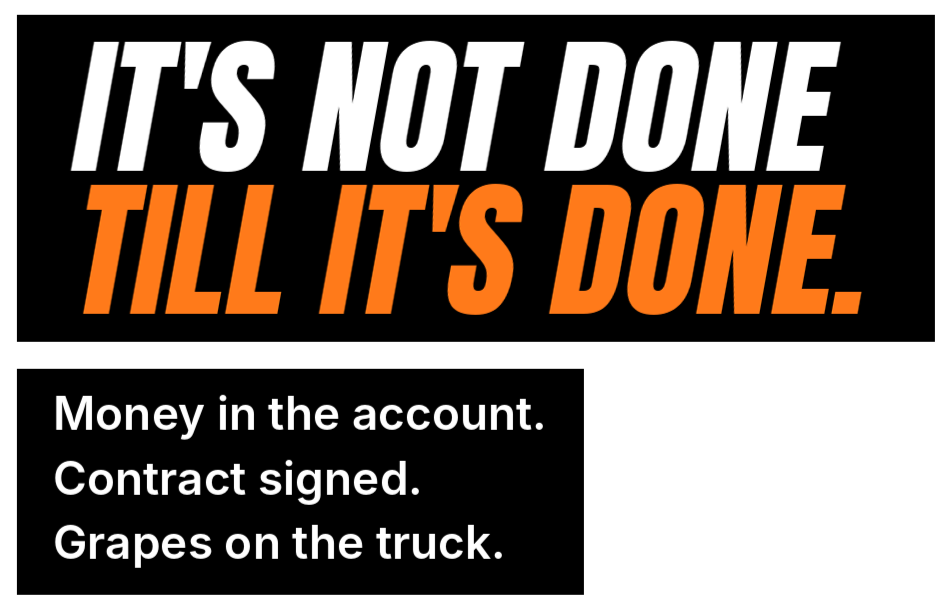
Even when it's tough, stay engaged and keep pushing until the deal is all the way over the line. Find out whether they're really solid. Are they committed? When are they going to sign? Drive for binding commitments, because until you have them, it's just happy ears.
A yes you haven't tested is just a maybe you enjoyed hearing.
So go look at whatever you've been quietly counting as done. Validate the answers you've gotten. Make sure the yeses are really yeses, and if they aren't, start backfilling now so you can make up for the ones that won't come through.
If you've got investors or customers saying yes and nothing closing, that's what a First Council Call is for. You send me your deck and materials, I review them before we talk, and we spend an hour on whatever is actually blocking you. You get a written summary within 48 hours. $500, once per founder.
If you've got investors saying good things but still sitting on the fence, this episode on why pre-seed investors delay has specific techniques for getting them through diligence and wiring the money.